
Giving voice to trees and walls: Sitoole-Ki Murals, Uganda
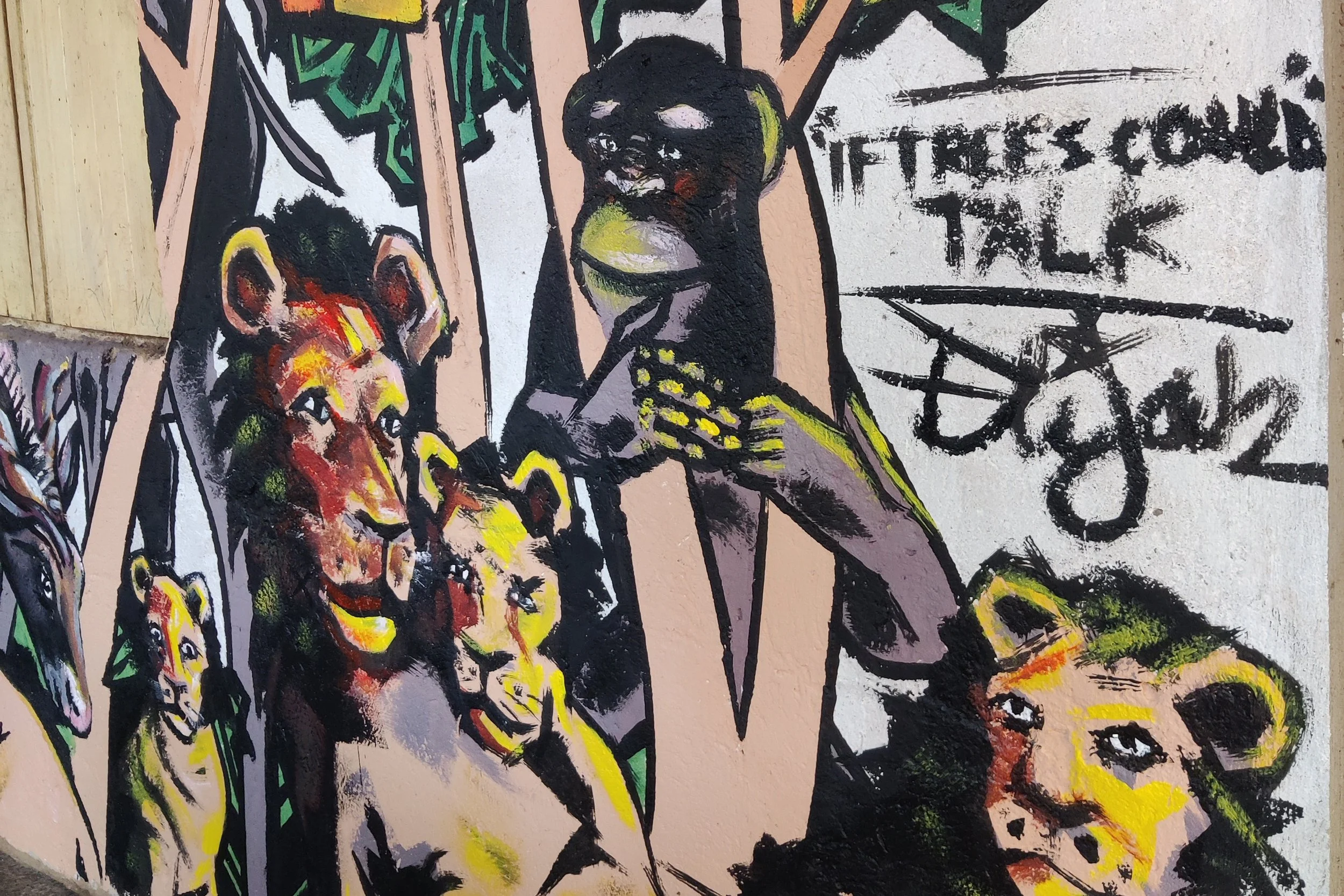
Sitoole-Ki Murals’ site-specific response to the Biennale’s question, turning the wall into “a public speaker for community messages about nature, home, and responsibility.”
As part of a series of features on the If Trees Could Talk International Art Biennale, Marahuyo Art Projects spoke to Elijah Agwaru Anomet of Sitoole-Ki Murals, an art collective in Uganda and a satellite partner of the biennale. Elijah talks about why they joined the biennale, their current project wakati mu miti (amidst trees), and how they incorporate sustainability into their art practice.
All photos courtesy of Elijah Agwaru Anomet/Sitoole-Ki Murals
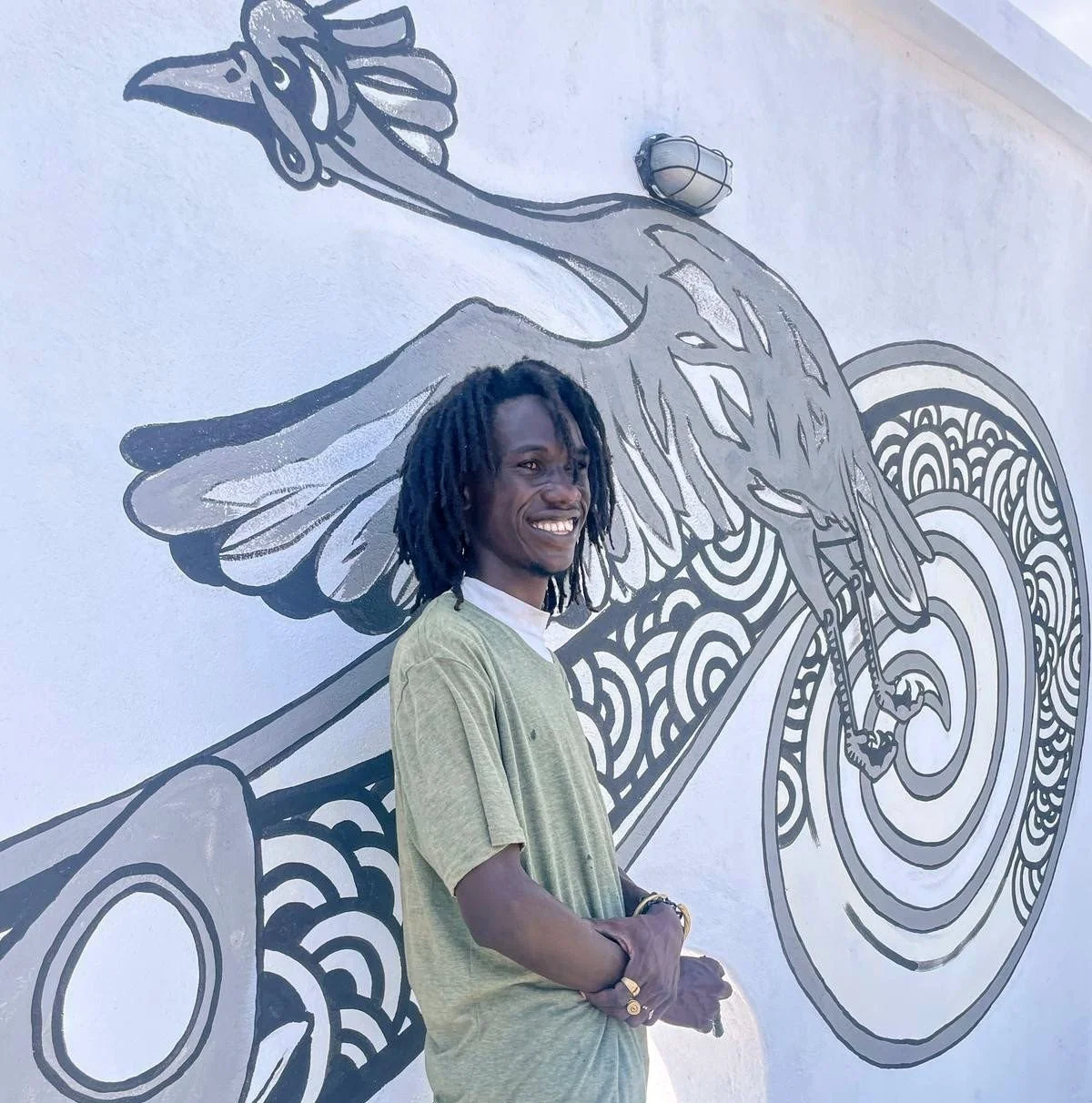
The artist with previous work. “I became an artist quite organically,” he says. “It started from observation, and also from necessity.”
Please tell us about yourself. How – and why – did you become an artist?
I’m an outdoor artist, creative teacher, and environmental activist based in Uganda. My work sits at the intersection of material culture, ecosystems, and public space. I became an artist quite organically. It started from observation—just paying attention to what surrounded me—and also from necessity. I grew up in a community where you had to improvise with what was available, so I learned early on to see value in materials people usually overlook or discard. Over time, that shifted from instinct into intention. Now, I work with reclaimed materials—burnt, waste, and exhausted—not just for aesthetics, but to tell stories about environmental memory, consumption, and regeneration. For me, art is both an expression and a way of researching and engaging with the world around me.
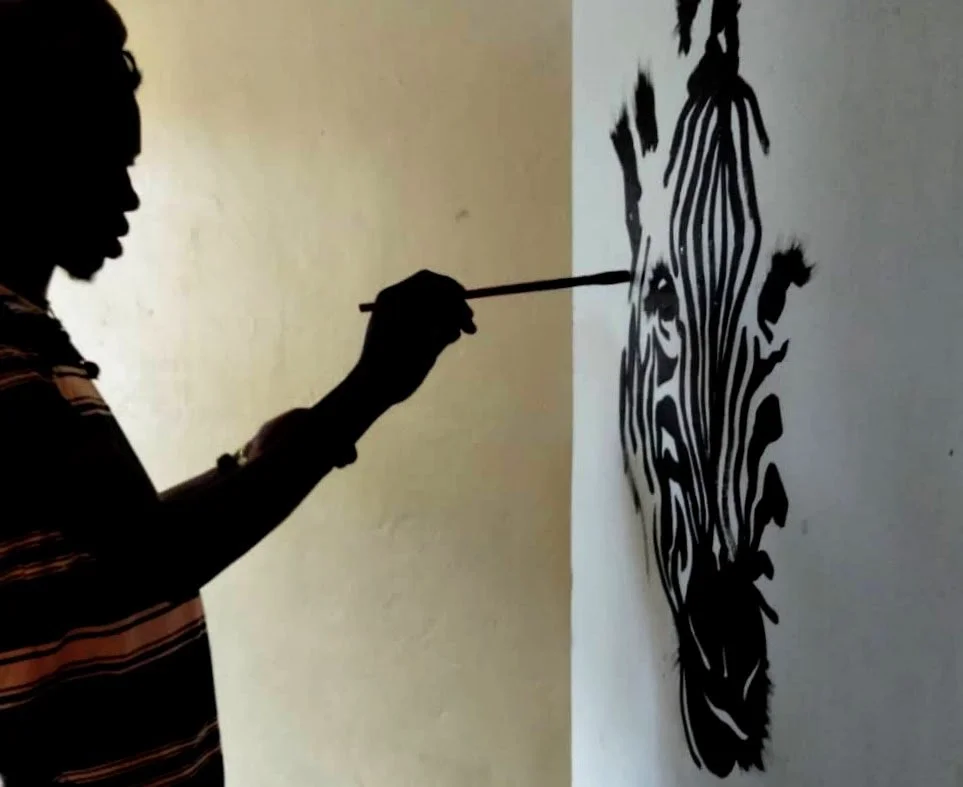
Elijah works on another past project, one of many he’s had since becoming a full-time artist.
Please tell us about your organisation. How did Sitoole-Ki Murals come to be? What is the story behind the name?
Sitoole-Ki Murals came out of a need to make art more accessible and rooted in informal communities. It started as a response to the lack of public art that reflects local realities, especially around the environment and everyday life. The name “Sitoole Ki” comes from the Gandanised saying that translates to what’s up?—it carries this sense of gathering, grounding, and shared space. That’s important to us, because we don’t see murals as just images on walls. They’re platforms for dialogue, for memory, for people to see themselves and their environment reflected. So the initiative brings together artists, communities, researchers, and sometimes scholars, to co-create works that are both physically engaging and socially meaningful.
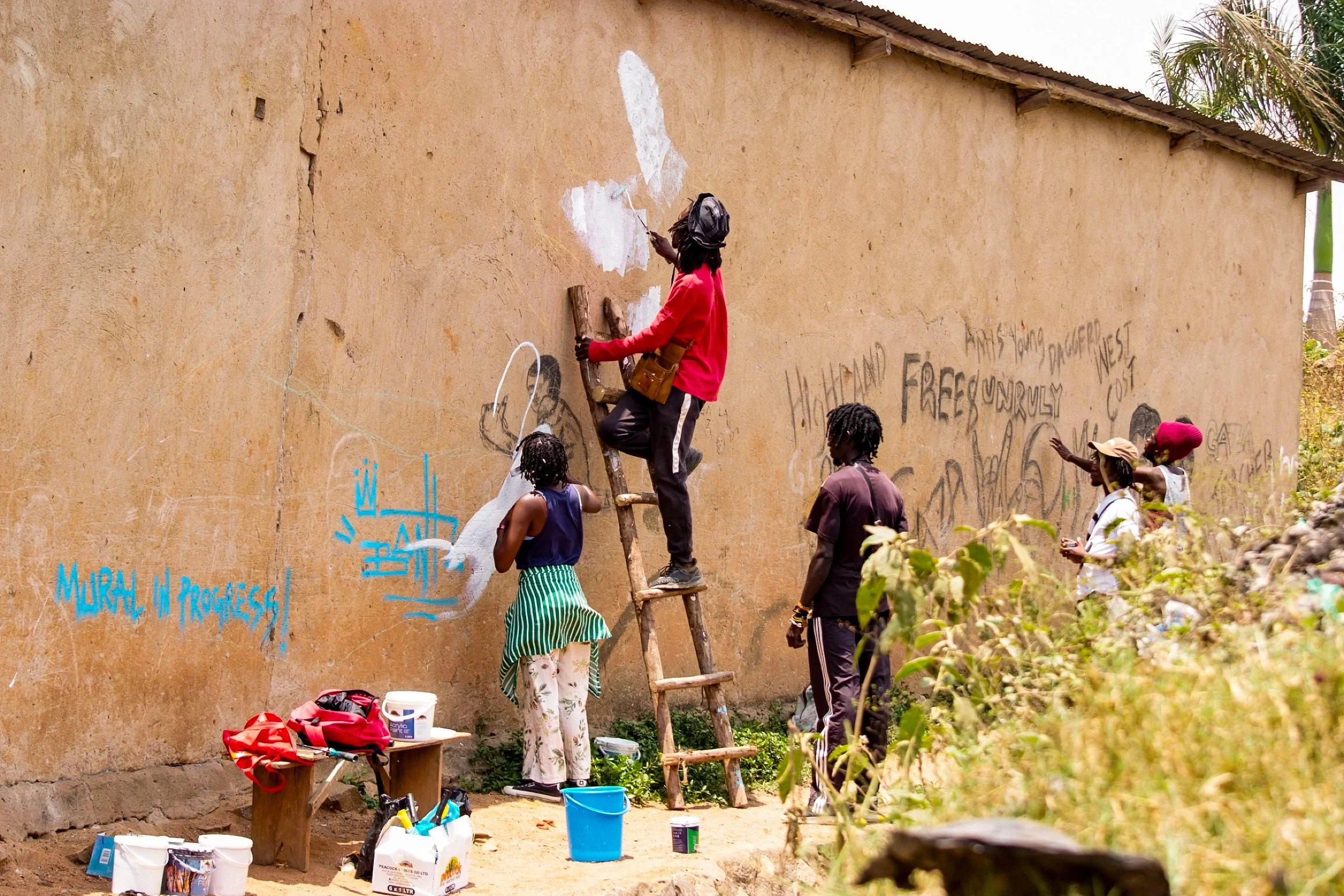
Elijah and local artists work on a past mural.
How did you come across the If Trees Could Talk Biennale and what made you want to join?
We came across the biennale through established artist and environmentalist networks, a space where people were already collaborating nature with storytelling. What immediately drew me in was the theme. The idea that trees could “talk” really aligns with how I think about material environment and culture, as carriers of memory, as witnesses. So joining the Biennale felt like a natural extension of our practice. It’s also an opportunity to connect with a wider, global conversation about how we relate to trees—not just as resources, but as living archives and collaborators in a way.
Who are the other artists involved in this If Trees Could Talk satellite project?
The project brought together a collective of local artists passionate about creating across the streets and what’s interesting is that everyone came in with their own perspective, but we’re all connected by this shared concern for the environment and public space. It’s very collaborative and process-driven, so there’s a lot of exchange of ideas, methods, and experiences.
“It’s about exploring the relationship between people and trees, especially in terms of time and memory. I think of trees as living archives… they hold histories of environment and settlement.”
Please tell us about your current project, Wakati mu Miti.
Wakati mu Miti, which translates to “amidst trees,” is a site-responsive project that combines mural and installation. It’s about exploring the relationship between people and trees, especially in terms of time and memory. I think of trees as living archives… they hold histories of environment and settlement. The project invites people to slow down, to be present, and to think about their connection to the trees. At the same time, it’s also a kind of quiet call to action, asking how we can exist more responsibly within these ecosystems.
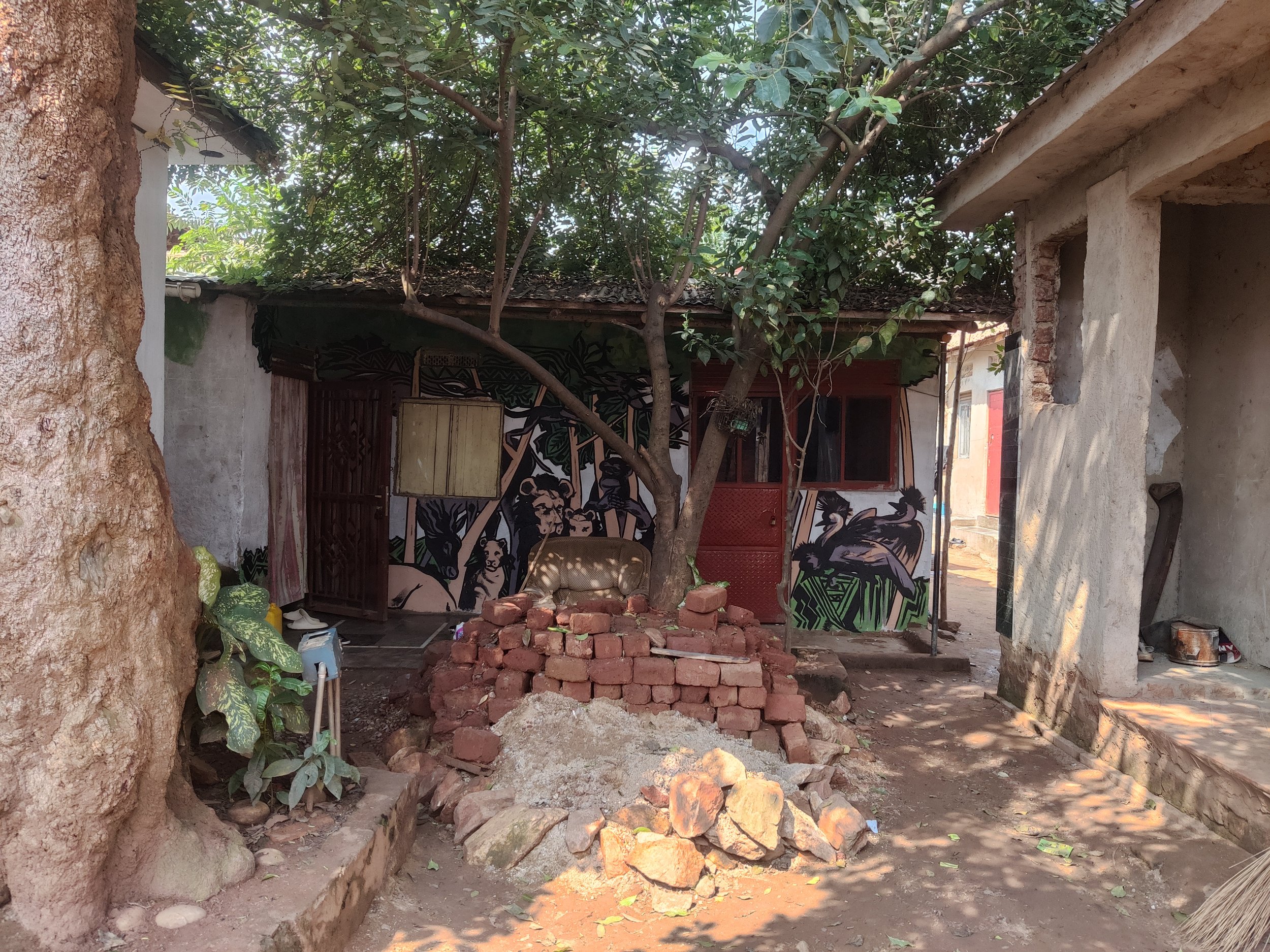
Elijah’s work centers on “giving voice” to walls—creating murals in everyday places, where they are accessible and easily seen.
What other projects, installations, exhibitions, or murals have you done in the past? What is your ethos?
Over the years, we’ve worked on a range of projects: public/private murals, live installations, and art research exceeding conventional materials and ideologies of creative expression. Some have been exhibited in collaborative platforms, others in festivals, and mostly in public spaces where different groups have engaged directly with our work. Our approach is grounded in responding to context, being responsible with materials, and involving people in the process. I don’t see exhibitions as static… they’re more like living processes, where making, interaction, and dialogue are all part of the work.
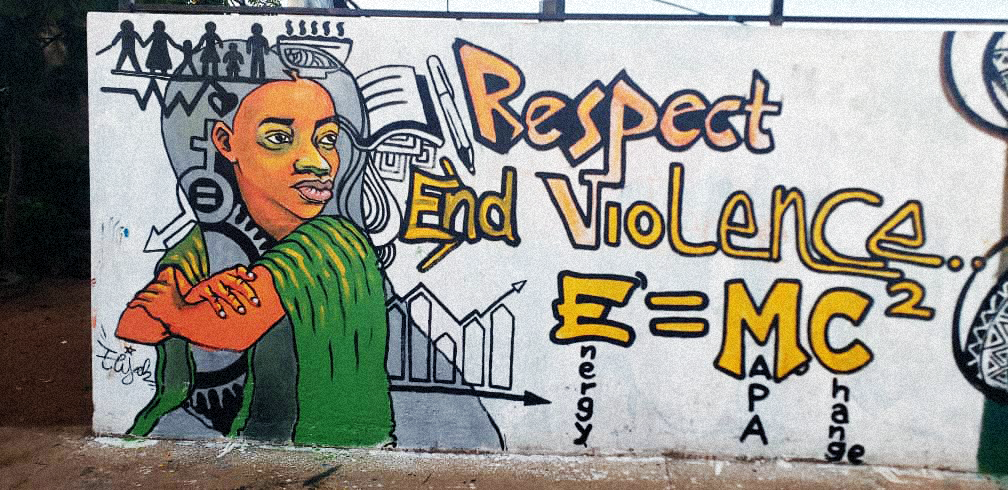
“For me, art is both an expression and a way of researching and engaging with the world around me,” says Elijah.
As muralists concerned with ecology, how do you ensure sustainability?
For me, creativity starts with the surface while sustainability is rooted in purpose. We work a lot with monochromatic palettes which allows organic pigments and repurposed materials exploration, which reduces environmental impact. We engage communities in thinking about these materials and practices—sharing knowledge, encouraging more sustainable ways of making and maintaining spaces. So it’s not just about producing eco-friendly art, but building a mindset around sustainability.
“Collectively, we’re drawn to trees that show both resilience and vulnerability. The ones that survive despite changing conditions, but also carry visible marks of human impact.”
Are there any trees or plants in your region that are personally significant to you?
In Uganda and/or East Africa, certain trees, like fig trees, have deep cultural and spiritual meaning. They’re often places where people gather, reflect, or even connect across generations. Collectively, we’re drawn to trees that show both resilience and vulnerability. The ones that survive despite changing conditions, but also carry visible marks of human impact. They reflect that tension between preservation and exploitation, which is something I explore in my research.
If trees could talk, what would they say? And what would you say to them?
I think trees would speak about time… about patience, endurance, and the consequences of how quickly we act/react as humans. They would remind us that we’re not separate from the environment, that everything we take or give leaves a trace. And what I would say to them… is that we’re learning, even if slowly. I would thank them—for the air, the shade, the histories they hold over generations. And through our work, we encourage people relate more closely… so their negligence isn’t mistaken for absence.◾️
To know more about Sitoole-Ki Murals and their work, follow them on Instagram at @sitoole_ki_murals. To learn more about Elijah, follow him on Instagram at @eli_jah_17.
Join the conversation. Apply to be a satellite partner of the If Trees Could Talk International Art Biennale at iftreescouldtalk.art/satellite. For questions or concerns, email trees@canvas.ph.