
ABUBOT: Consumption, memory, and transformation
A special exhibit of the If Trees Could Talk International Art Biennale

VIEW GALLERYJuried Selection
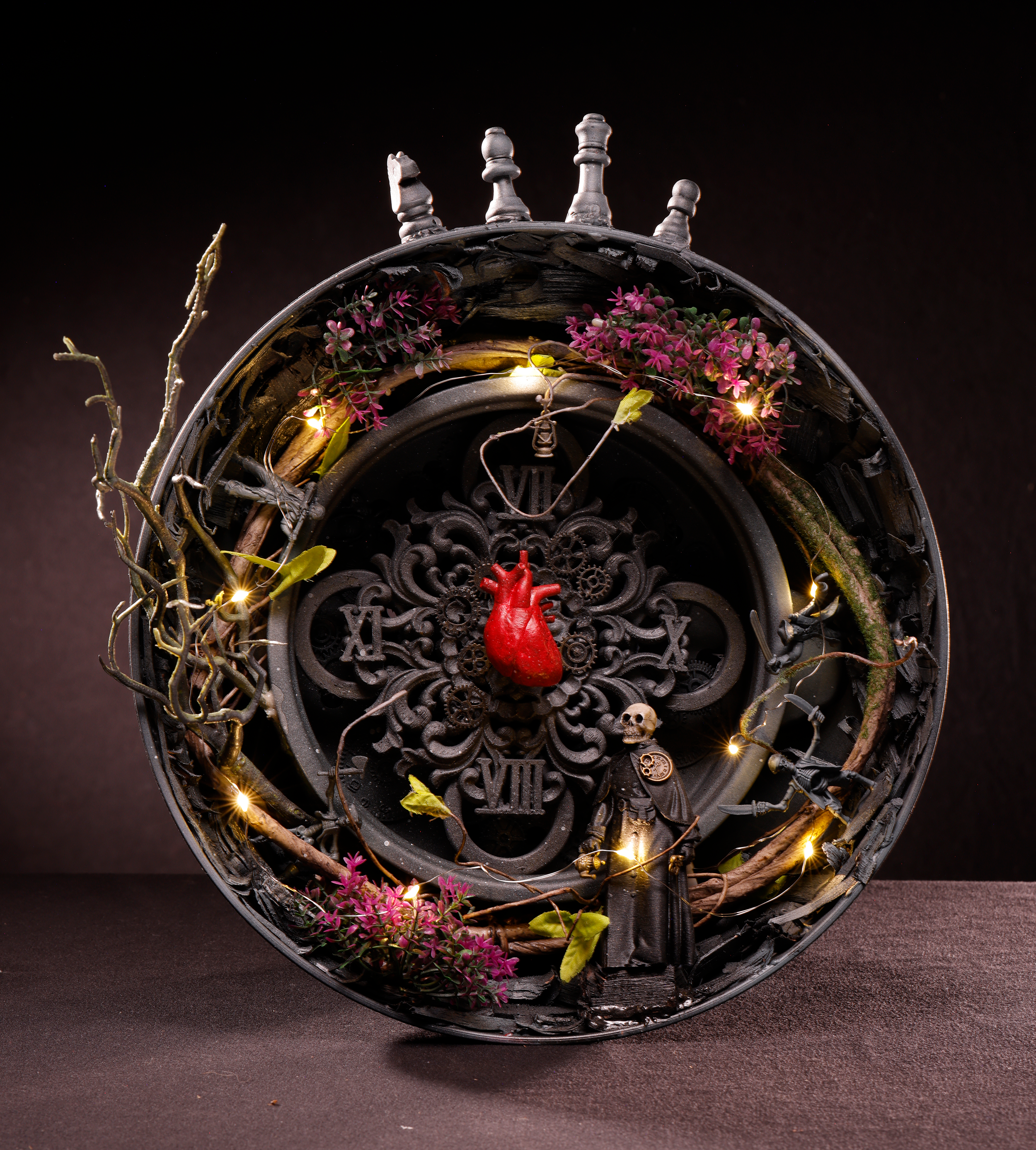
David Mark Abanes
Alive and Telling
10 x 12 inches
Found objects, upcycled pieces
2026
Alive and Telling is made of found objects, upcycled pieces, and unused and used objects. Its composition talks about how trees hold history and incarnation of knowledge and wisdom of time.
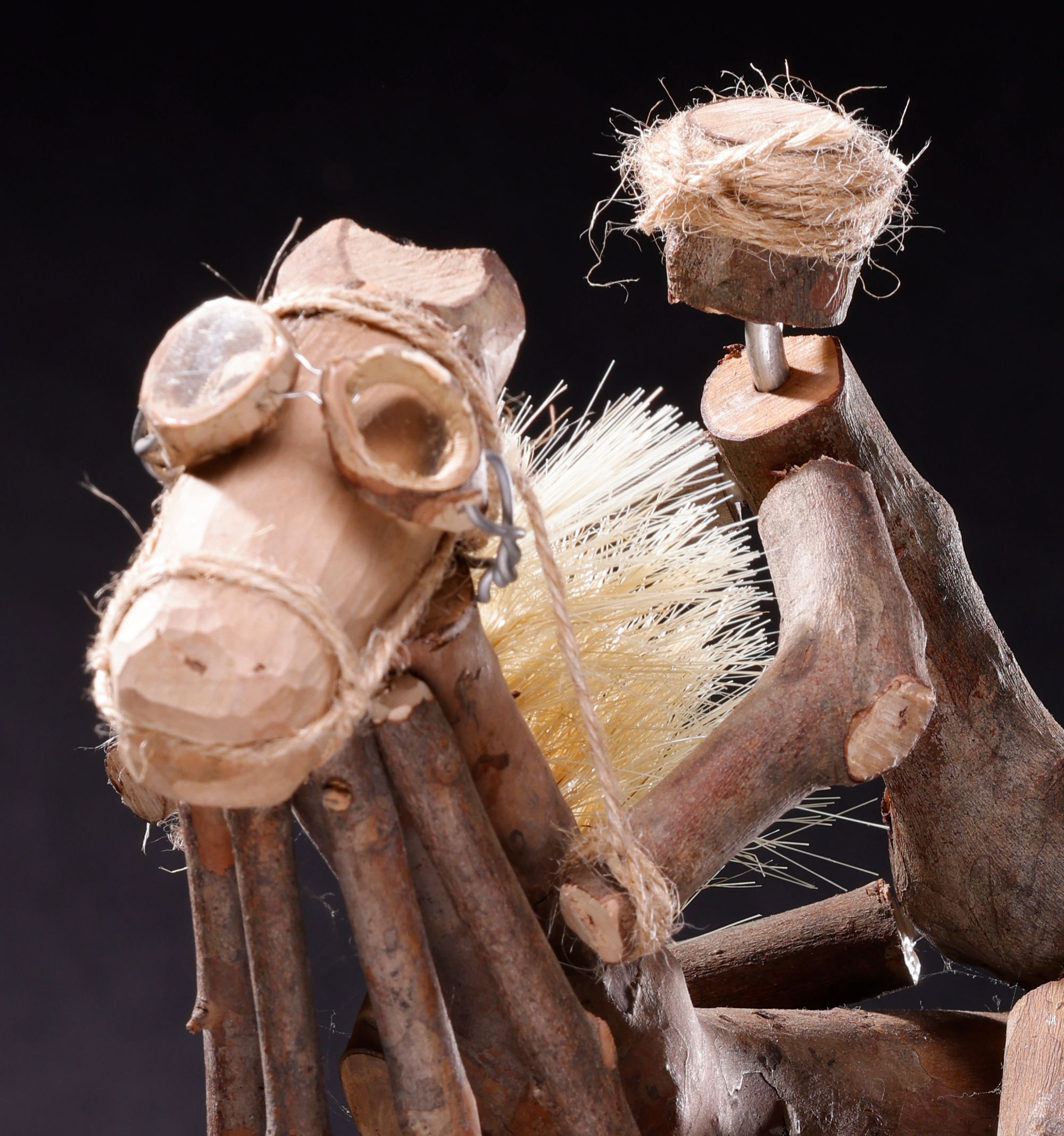
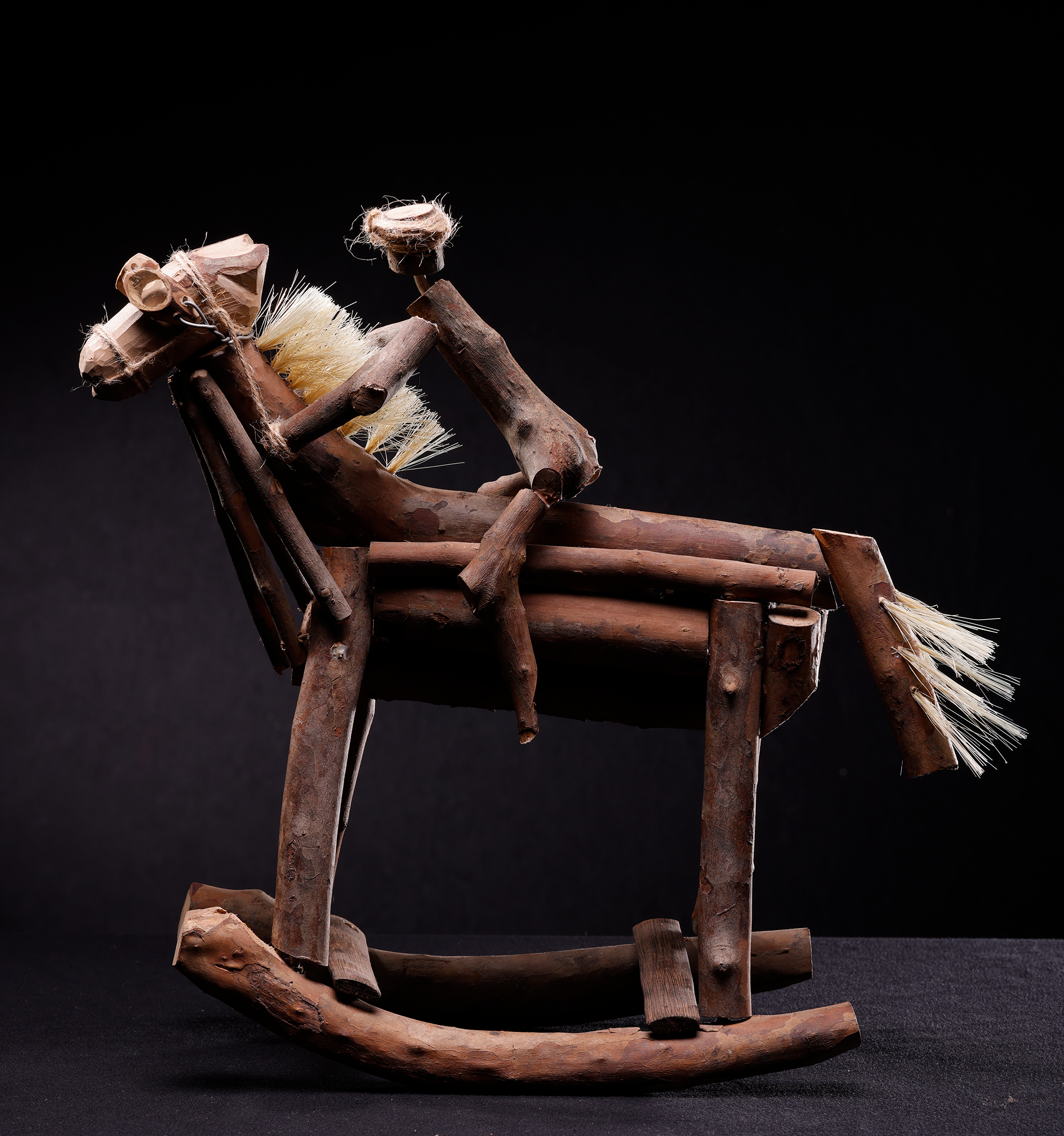
Richlie Amican
Unang Sampa sa Kabayong Tumba-Tumba
13.5 x 14 inches
Bayabas branch and aluminium wire
2026
Joshua Carlos Barrera
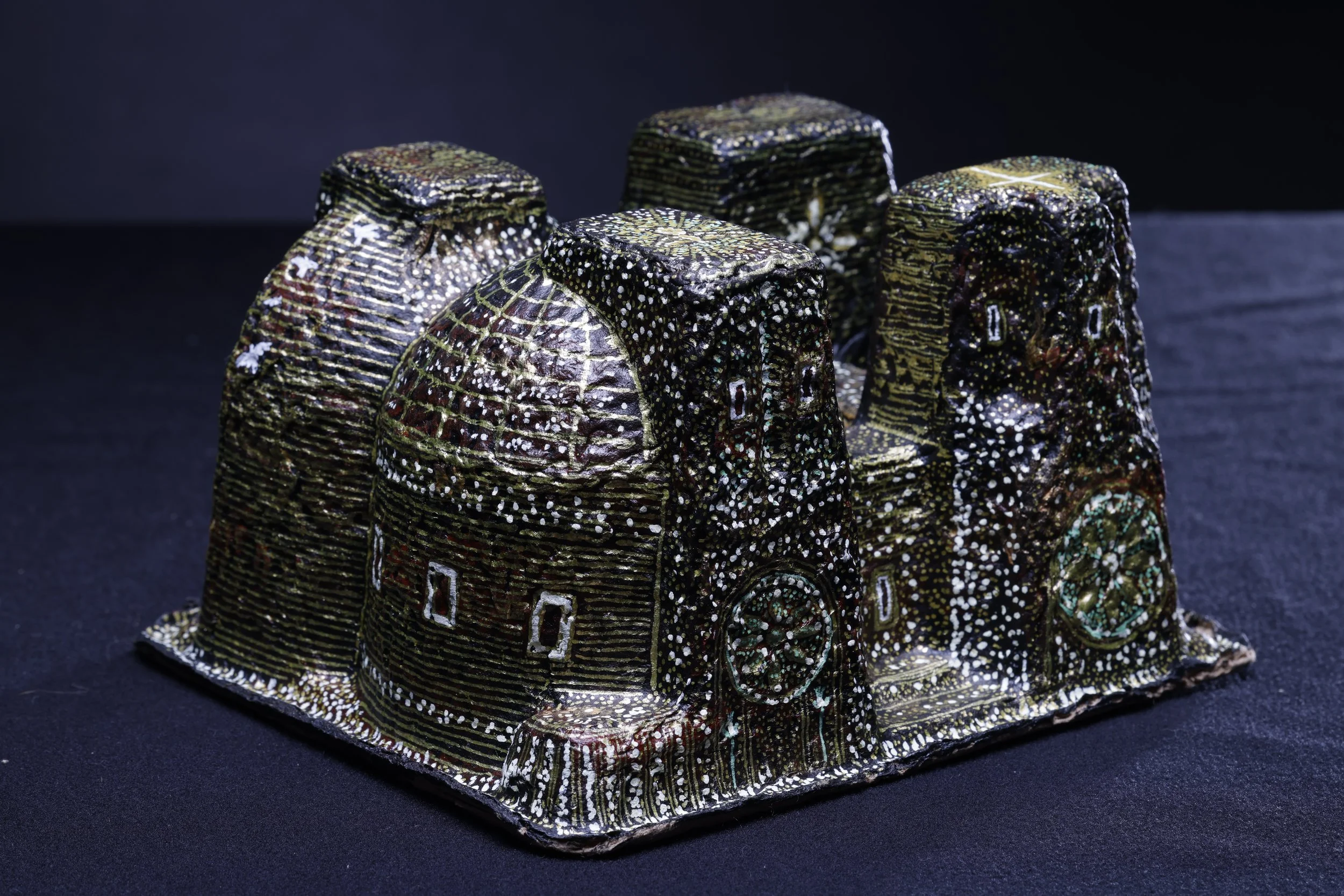
Replica of Faith
6 x 7 x 4.5 inches
Acrylic, metal leafing pen on beverage carton
2026
Replica of Faith turns a flipped over and painted beverage carton into a small-scale structure resembling that of a church. Based on miniature souvenir replicas of world-famous cathedrals such as those across Europe, this artwork intersects religious faith, morality-in-practice, and mass consumerism propagated by hype culture.
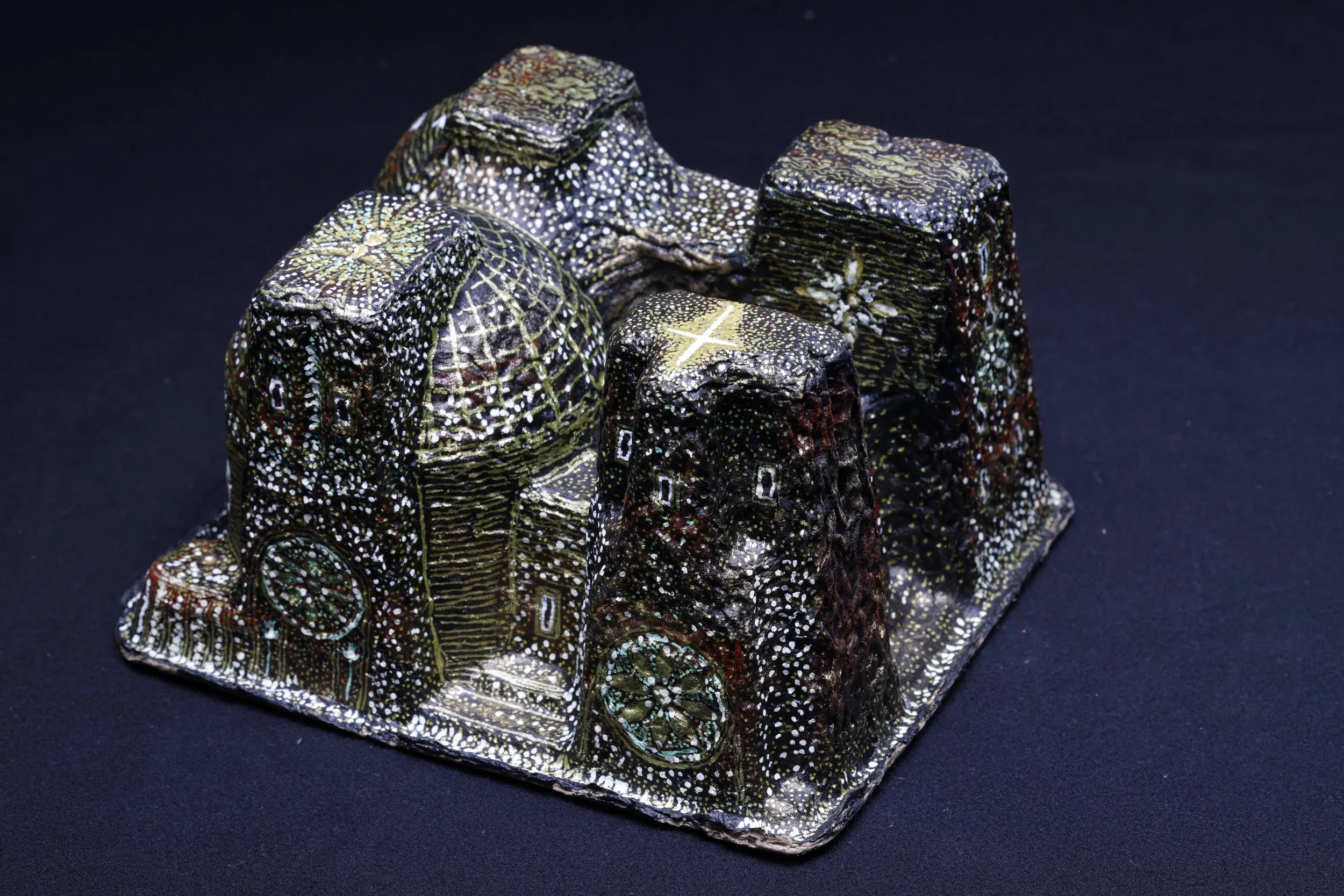
Coffee, milk tea and other beverage chains have transcended from being mere offerings of food and drink to symbols of aspirational lifestyles – often blurring the lines between quality product and appearance. Such brands then gain followings – and like a church – are subject to being blindly revered without question that may ignore the underlying issues of labor, waste management, and overall transparency to consumers. Thus, Replica of Faith, in its golden pigments painted in pen over the uneven surfaces of the carton, presents itself as both the souvenir and leftover of one’s faith towards an entity. It may hold meaning and warmth to some, yet by its materialistic nature, is inherently cold and hollow.
Nubbin Beldia III
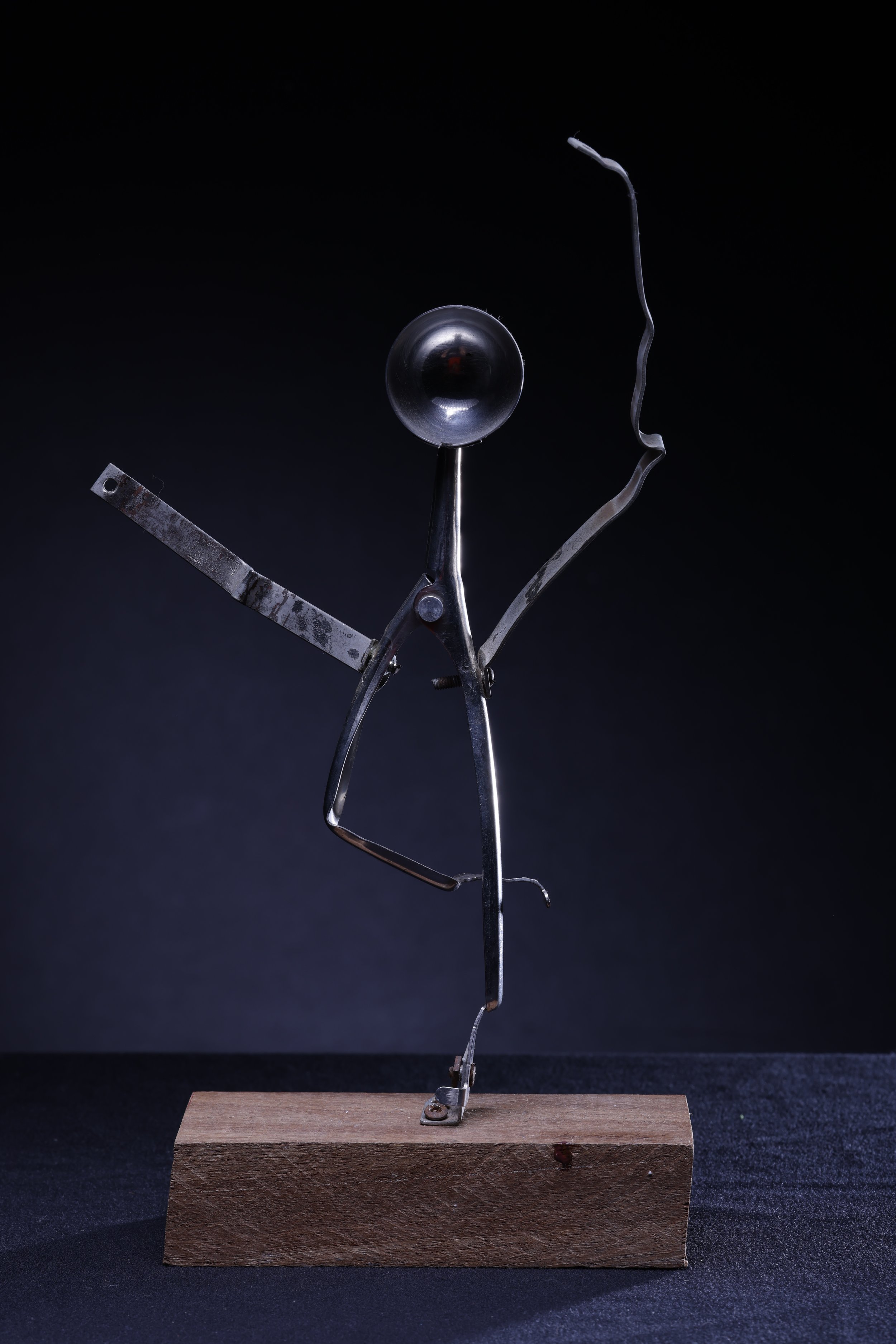
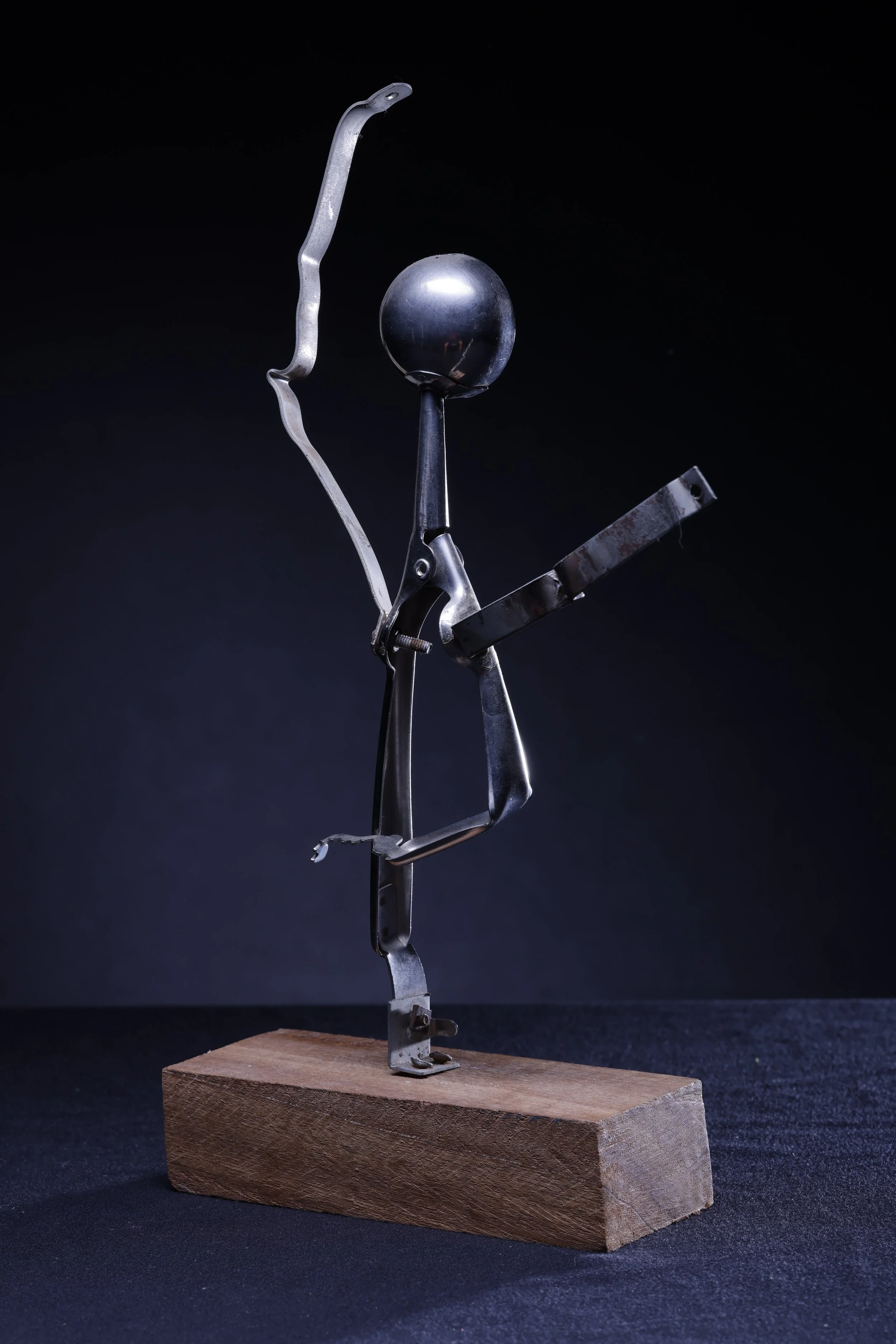
The Dancer
4 x 10 inches
Discarded ice cream scoop and metal fasteners on wood
2025
Sebastian Cacho
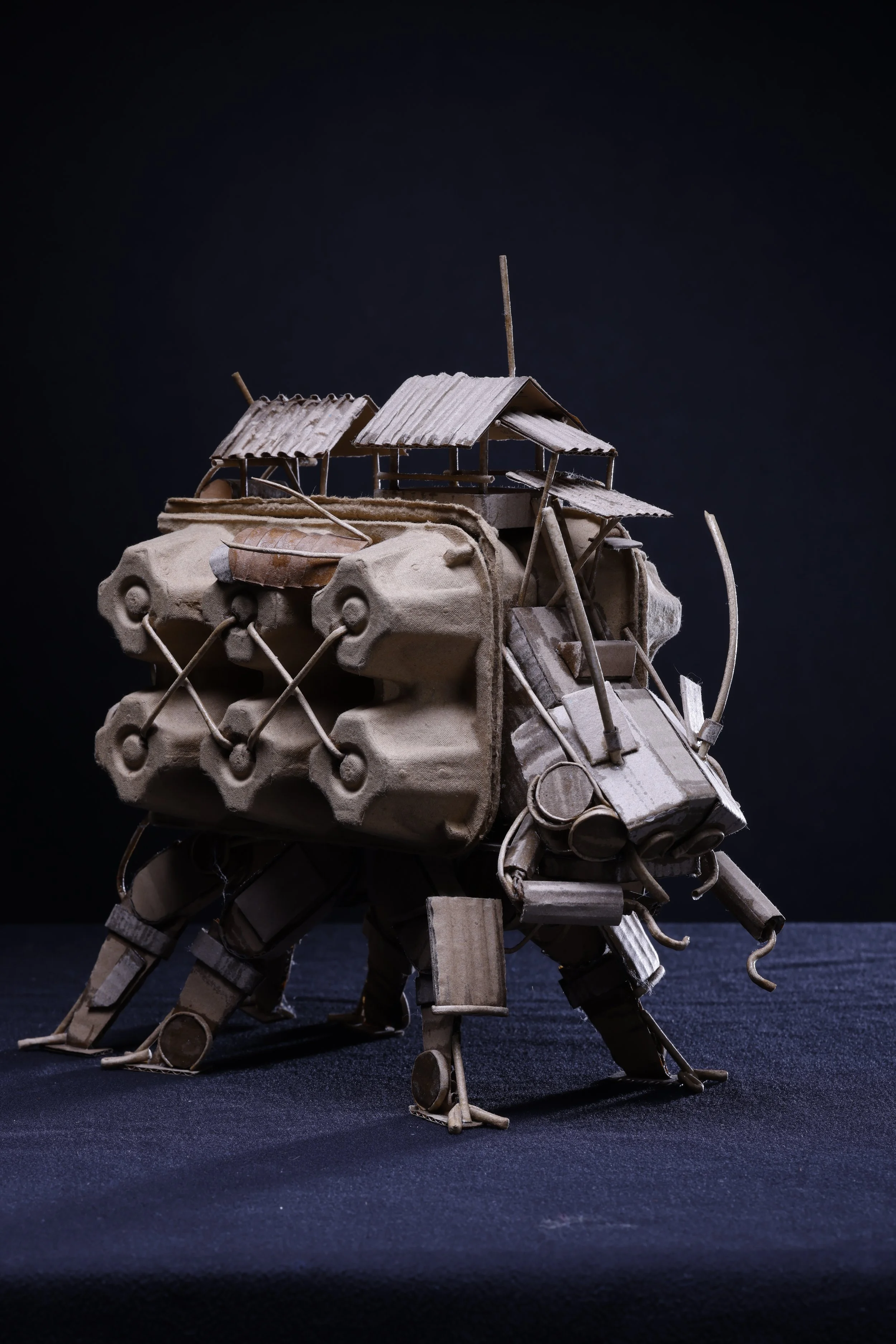
Ipis Apartment
11 x 6 x 10.5 inches
Cardboard and paper
2026
Ipis Apartment is a mechanical cockroach habitat sculpture constructed entirely from discarded cardboard, egg trays, pizza boxes, and packaging materials. Designed as a mobile dwelling rather than a static structure, it reflects movement as a condition of survival.
Drawing from the resilience of the cockroach, the work explores adaptation, endurance, and the human instinct to persist through uncertainty. By transforming discarded materials into a detailed architectural creature, the sculpture reclaims what is overlooked and gives dignity to the ordinary. Ipis Apartment is a tribute to resilience, resourcefulness, and the universal desire for a better life despite limited means.
Kendall Colindon
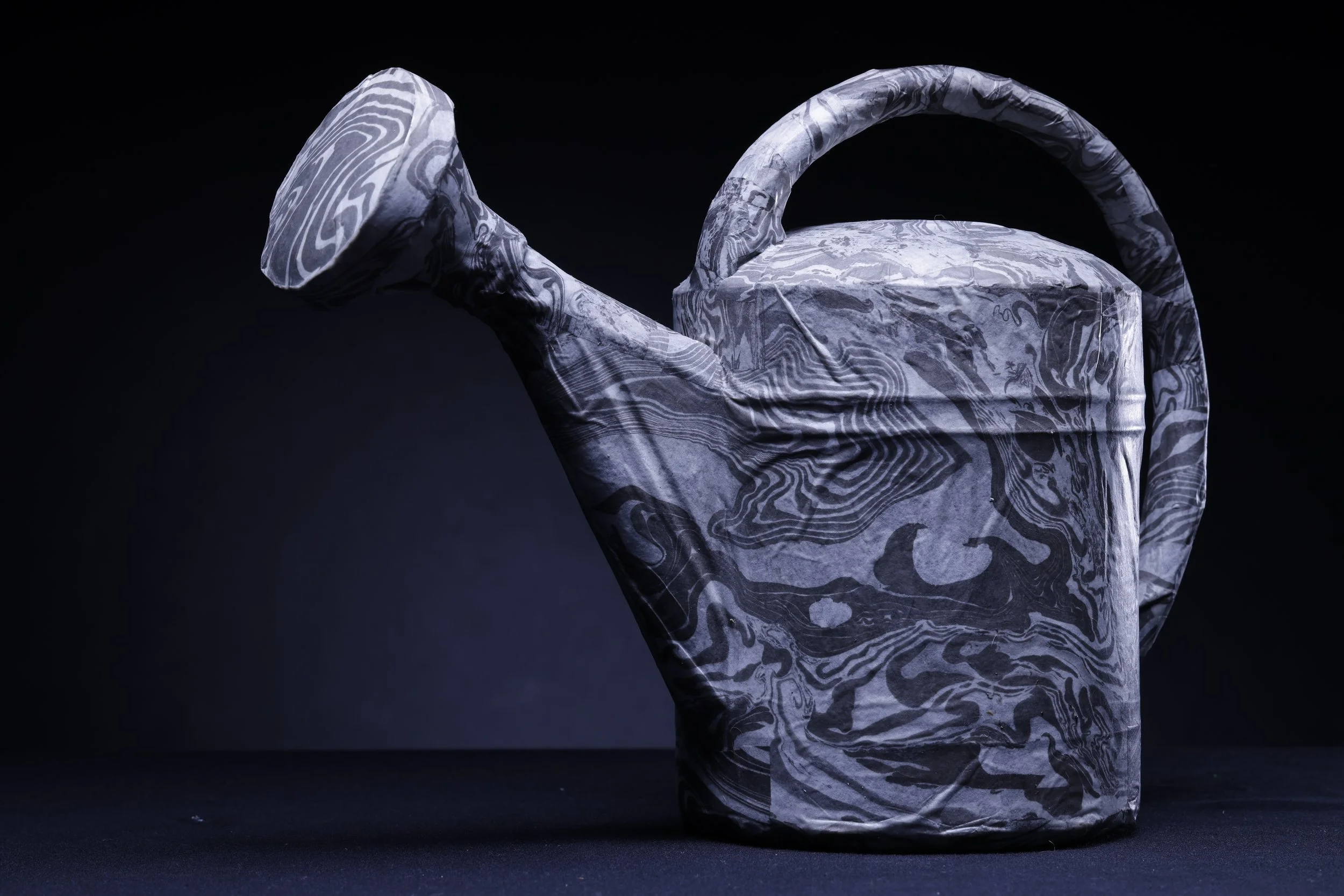
Daloy
32.5 x 15 x 24.2cm
Used watering can covered by sumi ink prints on rice paper
2026
This work is a old watering sprinkler transformed into an sculptural work with a fluid, black-and-white marbled pattern that swirls across its surface like abstract water currents covering it using sumi ink prints on rice paper. The organic, wave-like textures give the everyday object an artistic, meditative quality, suggesting movement and continuity—capturing the essence of “daloy” (flow). The contrasting shades highlight the sculptural form of the can, turning a functional item into a contemplative piece of art that celebrates the beauty of natural flow and artistic transformation.
Lorebert “Maralita” Comision
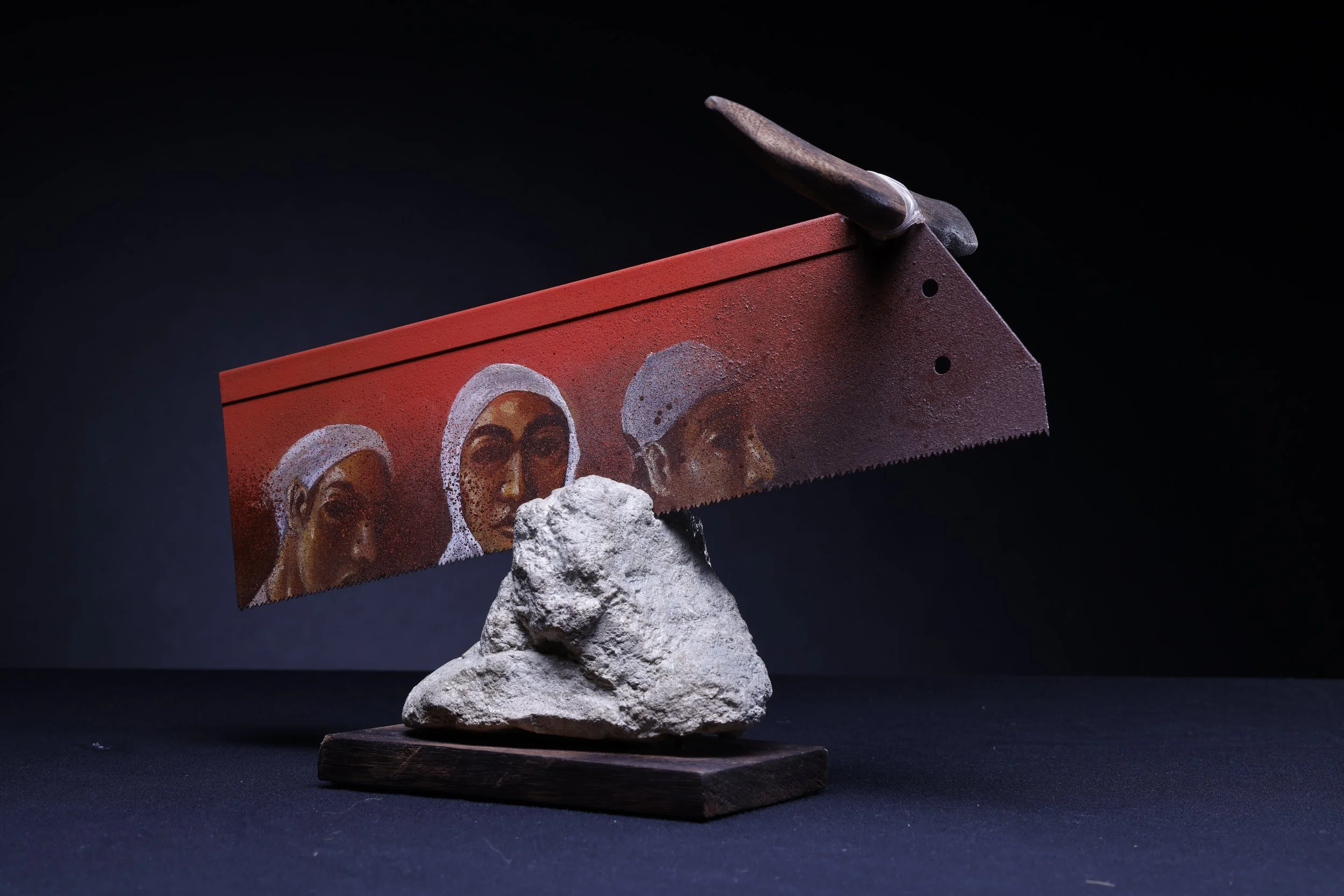
Kailangan Lumagare
Acrylic on discarded wood saw, wood, cement
13.5 x 9 x 8 inches
2026
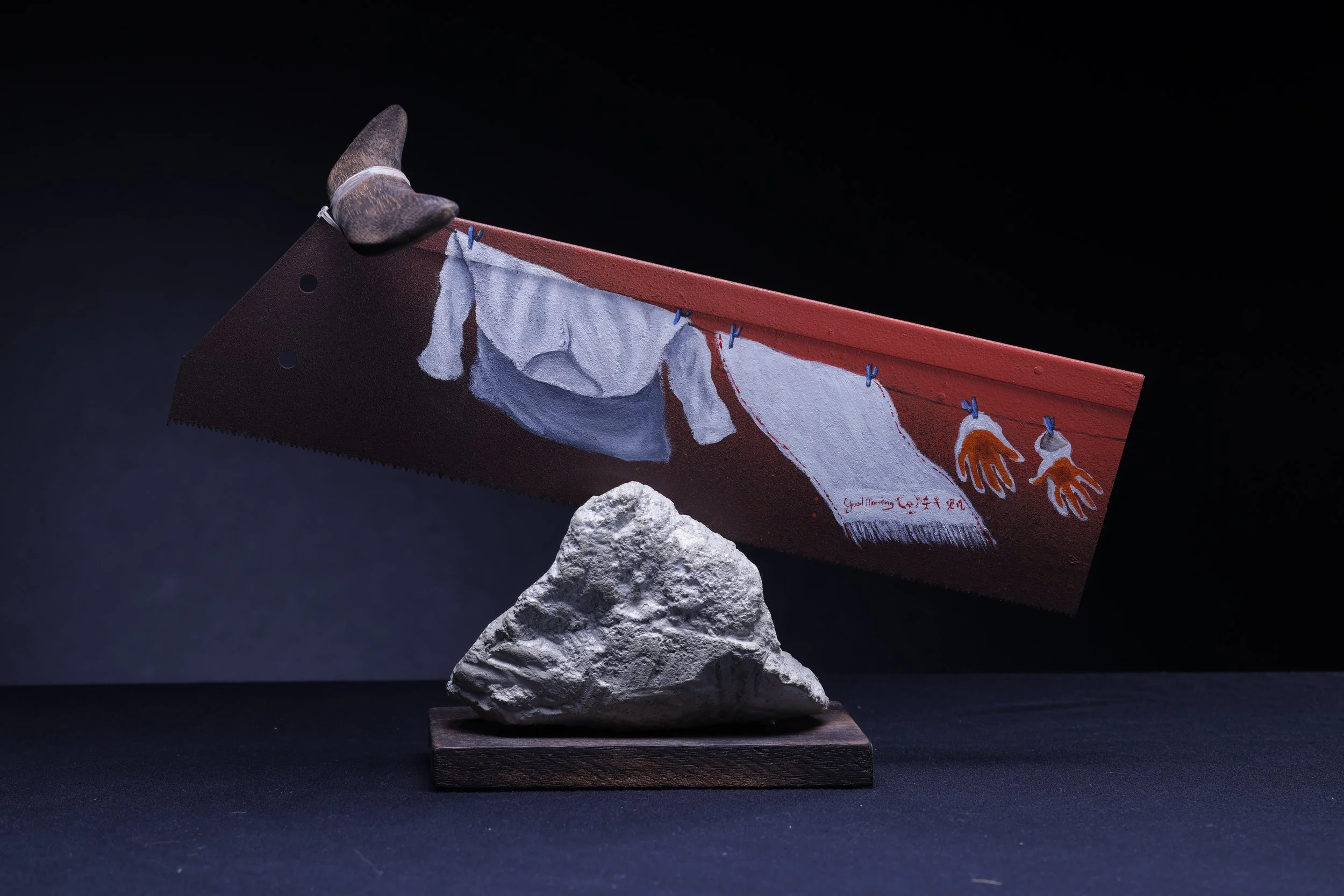
Kailangan mag batak,
Patulak o pahatak.
Lumagari’t mag sipag
Pigain abilidad.
Hala sige mag bilad!
Dahil may responsabilidad.
Umararo sa syudad
Pagod ay sinasagad.
At walang ibang hangad
Bukas matikman ang pag-unlad.
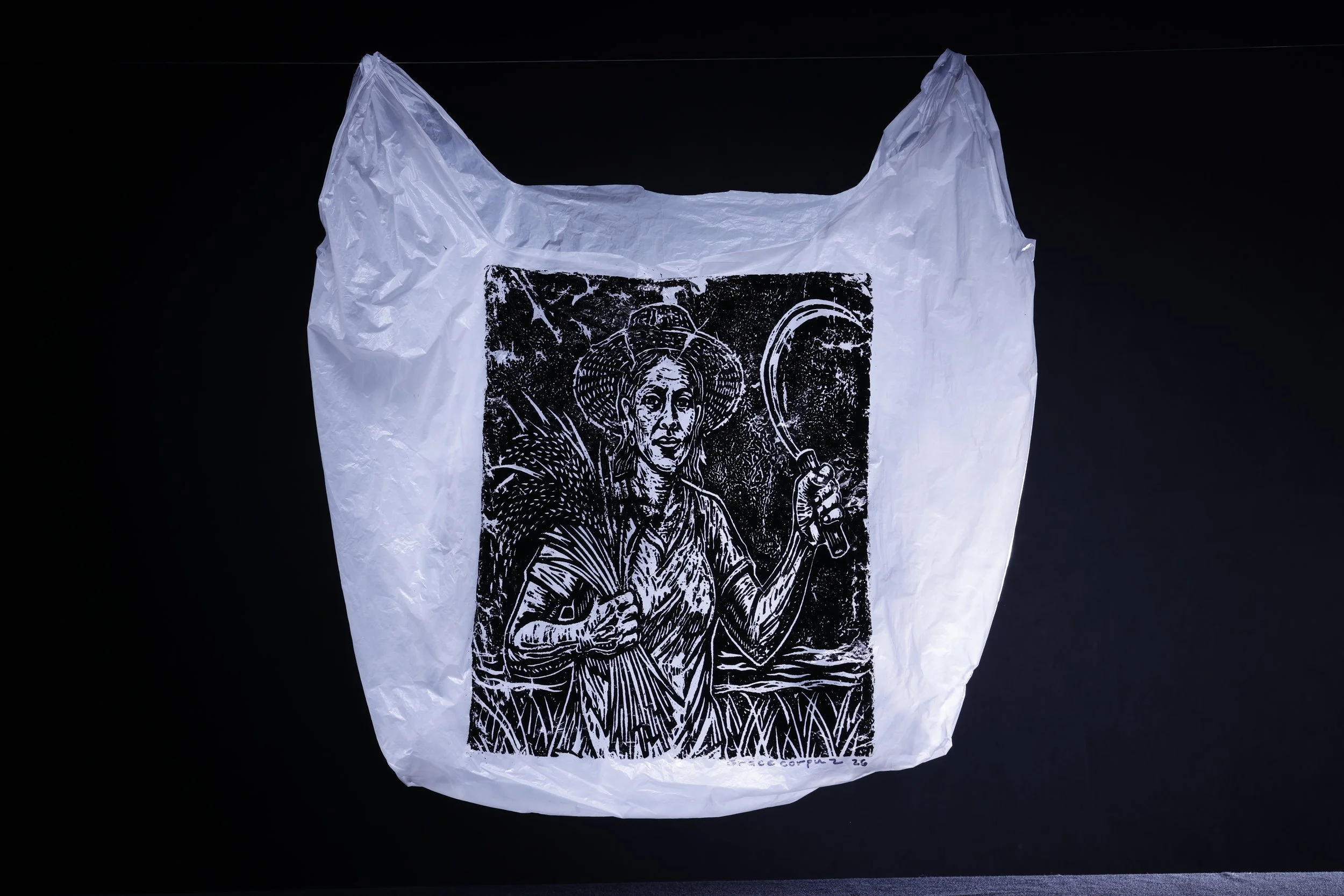
Grace Corpuz
Ugat ng Paggawa, Bunga ng Dangal
15 x 15 inches
Linocut print on plastic bag
2026
Our trees and farmers are precious resources that deserve our protection. Trees supply oxygen, food, and habitat for countless species, while farmers work hard to produce the crops we rely on. By preserving forests and supporting sustainable agriculture, we safeguard biodiversity, mitigate climate change, and ensure food security. Taking care of trees is securing our own future. If we don’t safeguard them, food scarcity and environmental imbalance can hit us hard. Plus, farmers are the backbone of our economy, and trees are our natural shield against climate change.
Let’s cherish and protect these vital assets for a healthier, more sustainable future. #LandToTheTillers
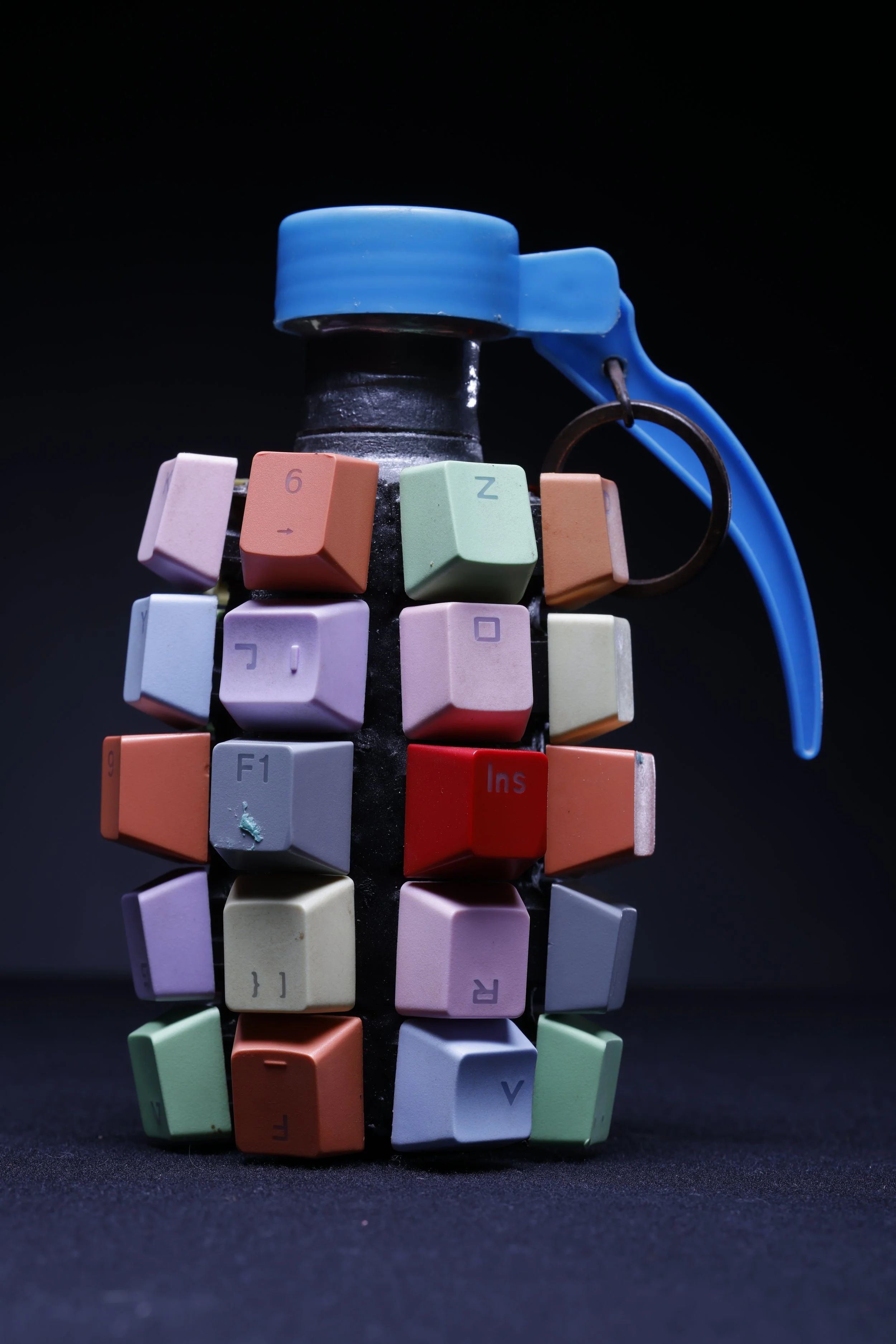
Oscar Floirendo
Kanya-kanyang hagis
5.5 x 3 x 3 inches
Mixed media assemblage (multi-colored mechanical keys with crisp, loud, and relaxing clicking percussion sound)
2021
Kanya-kanyang hagis is a fidget art toy sculpture that references fake news, mudslinging, and toxic rhetoric on the spectrum of current Philippine political election and impeachment climate causing collateral damage in its wake beyond social media platforms and into conflicts between families and friends with differing opinions.
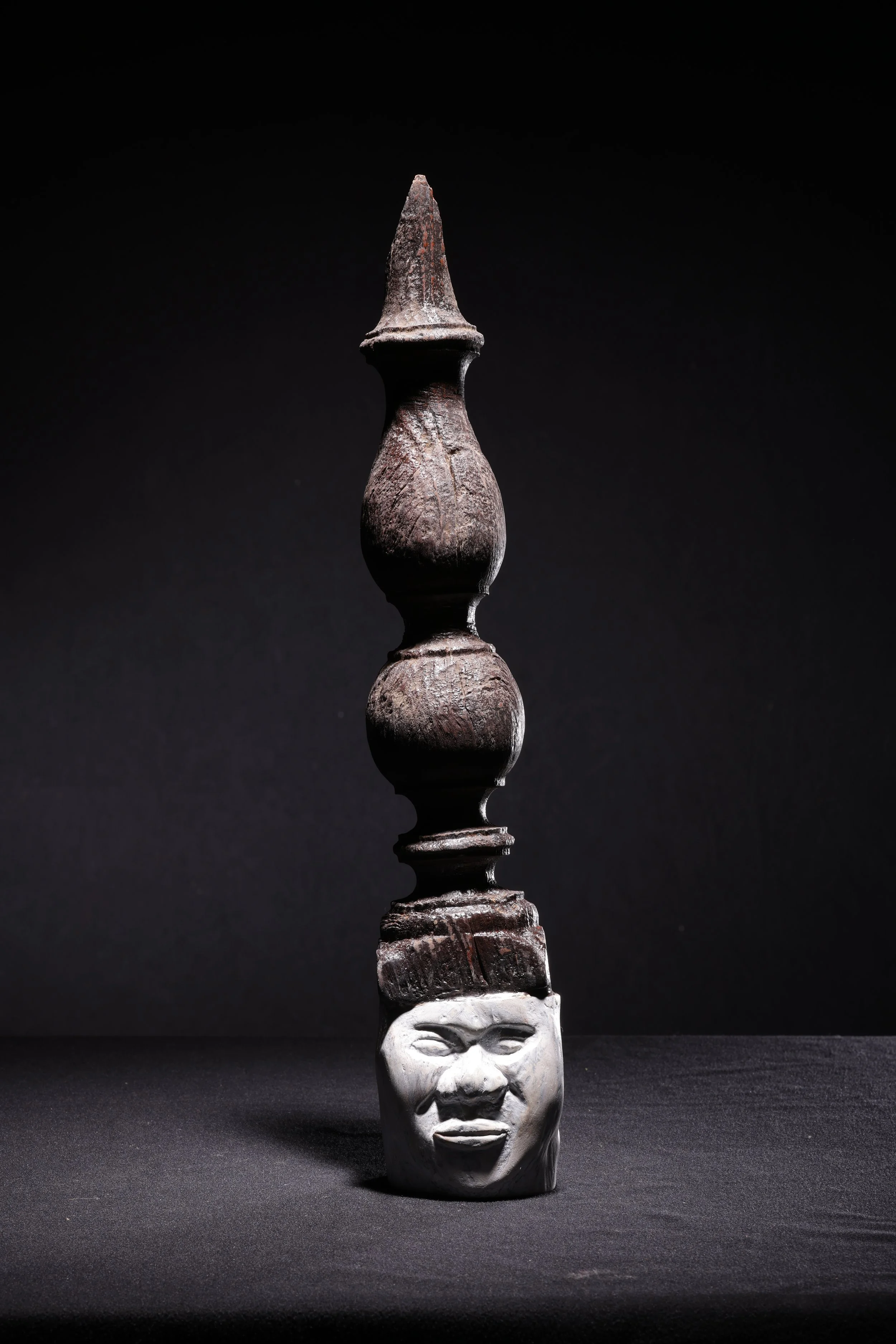
Juan Javier Garchitorena
Baliktad ang Mundo ni Juan
17 inches
Carved wood and found object (baluster), polychrome
2023
In this sculpture, the physical weight of salvaged materials serves as a metaphor for the psychological burdens of the human condition. The work is constructed from two distinct sources of wood, each carrying its own history of survival and transition: salvaged timber from the aftermath of Typhoon Odette (December 2021) in Dinagat Islands and an ancestral baluster from my family home in Tigaon, Camarines Sur.
The piece features a face carved from the storm-felled wood, representing the internal ‘self.’ This is integrated with the architectural baluster to explore the theme of mental and emotional saturation. The title, Baliktad ang Mundo ni Juan, reflects the disorienting reality of internal struggle. It speaks to the universal experience of being overwhelmed—the sensation that everything is “inside our heads,” creating a heaviness that eventually upends our equilibrium.
By using wood that has literally weathered a catastrophic storm, the material itself mirrors the resilience required to navigate mental weight. The “upside down” orientation of Juan’s world suggests a loss of gravity and stability, where the distinction between the external environment and internal thoughts becomes blurred. The use of the baluster, a symbol of structural support and domestic stability, contrasts with the chaotic origins of the typhoon wood, highlighting the tension between the safety of home and the turbulence of the mind.
Ultimately, this is an exploration of the invisible weights we carry. It invites the viewer to consider how internal pressures can reshape our entire perspective, turning our perceived reality on its head while we attempt to remain grounded in the remnants of our past.
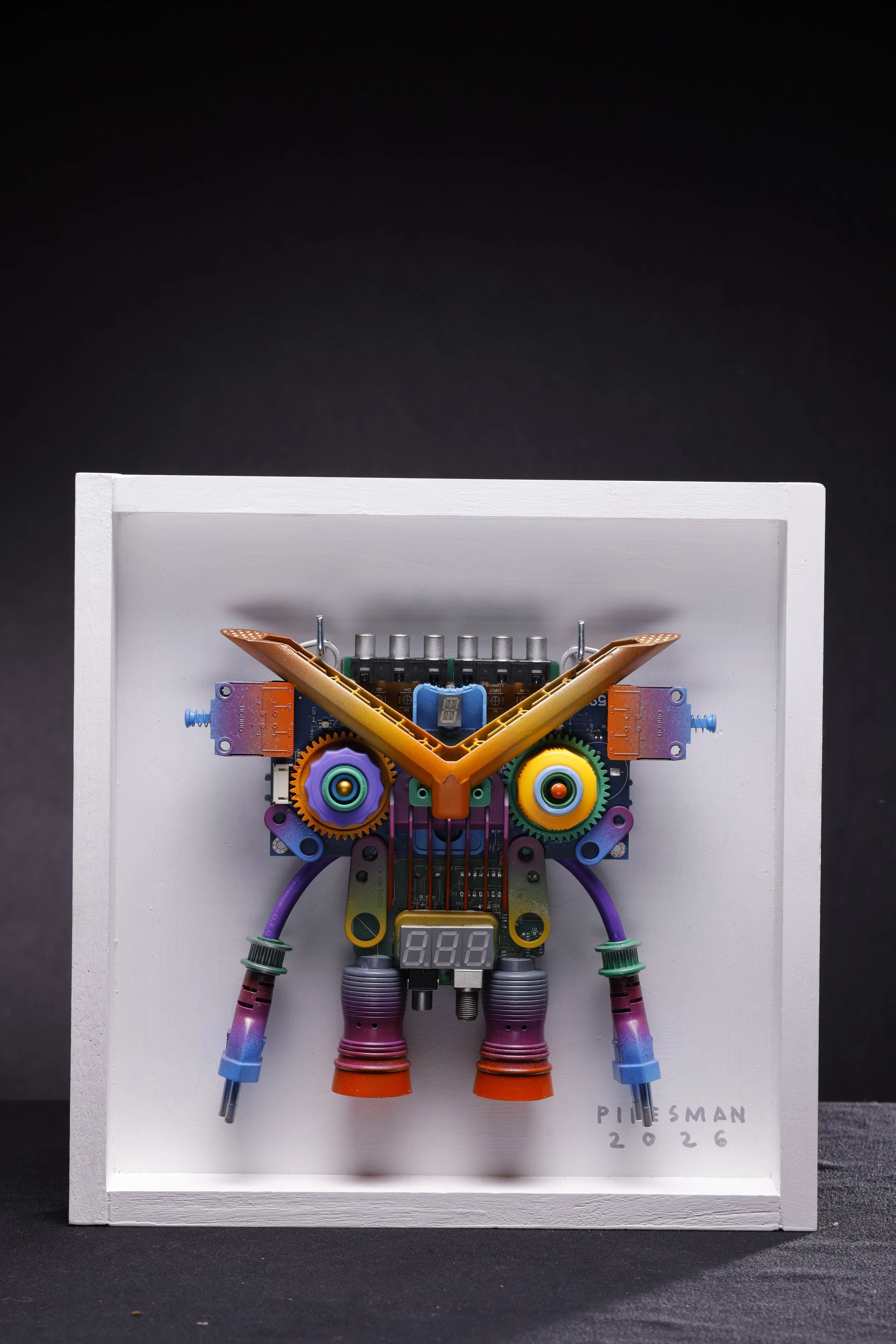
Lino Berro Jamisola (a.k.a. PIPESMAN)
AbuBOT Raw-Bot
12.5 x 12.5 x 12 inches
Mixed media (repurposed objects, found objects, recyclables, e-waste)
2026
Ang aking likhang obra ay inspirasyon mula sa noo’y aking pagkabata, namulat sa paligid na puno ng nagkalat na kung tawagin ay basura na ‘di ko mawari patapong bagay na, ngunit sa tingin ko’y maaring butingtingin at mapaglaruan, sa hindi sinasadyang kabuluhan ng pagkalikot sa mga nagkalat na ito, sa murang edad nakakalikha na pala ako ng mga pang-sariling laruan, sa kadahilanan na rin na hindi ako nabibilhan.
Gayon pa man hindi lumipas ang aking pagkabata na malungkot at walang saya, sapagka’t nagkaroon ito ng kabuluhan upang mahubog ang aking pagkamalikhain sa pamamagitan ng pag-obserba sa mga gumagawa sa konstruksyon, pagkakarpintero, tubero, at iba pang gawaing pinakikilos ang kamay sa paglikha sapagkat nagmula ako sa simpleng pamilya ng mga construction worker at ang ang paligid ay puno ng tambak ng kung ano anong bagay. Ang Rawbot crafts ko ay ang pinakamasayang yugto ng aking kabataan sapagkat nililikha ko ito ng walang limitasyon na syang pundasyon ng aking naging propesyon bilang alagad ng sining na may pagmamalasakit sa kalikasan at ambag sa bayan.
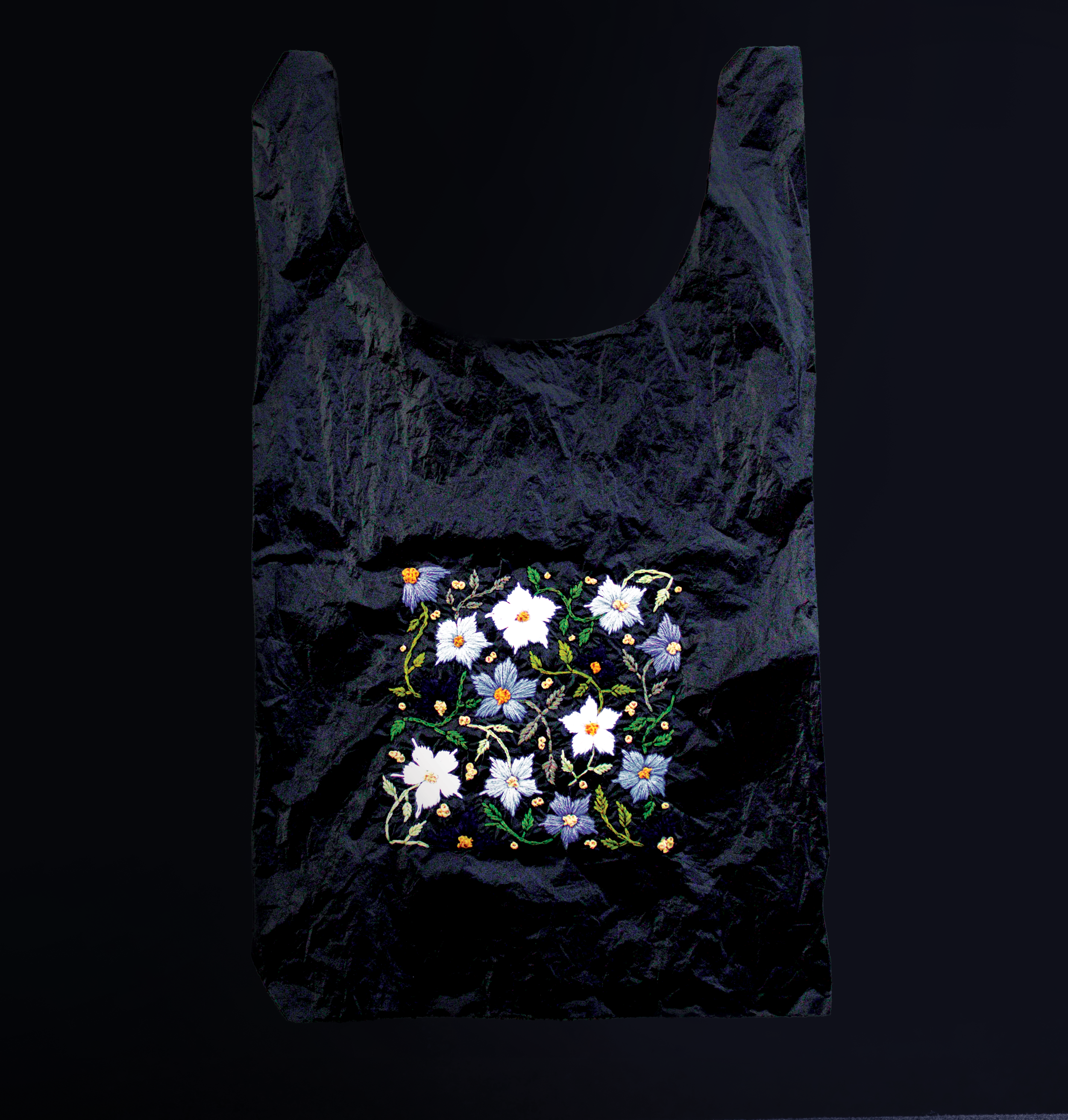
Gabriella Lindsay
One Man’s Garbage
5 x 11 inches
Embroidered florals on a plastic trash bag
2026
This piece explores our attention to ephemerality for both florals and the single-use plastic bag. Both of these subjects keep brief lives: one is biodegradable and the other is notorisouly indestructible. They are both transient in our lives, but we celebrate flowers and quickly abandon our plastic. Our attention or lack of attention also consumes: even as our planet suffers under the pollution of our plastic consumption, we bring into our homes flowers wrapped in plastic, flowers meant to nurture and sustain our pollinators. Examining my own contribution of unnecessary waste as an artist led me to challenge myself to incorporate single-use plastics in my embroidery.
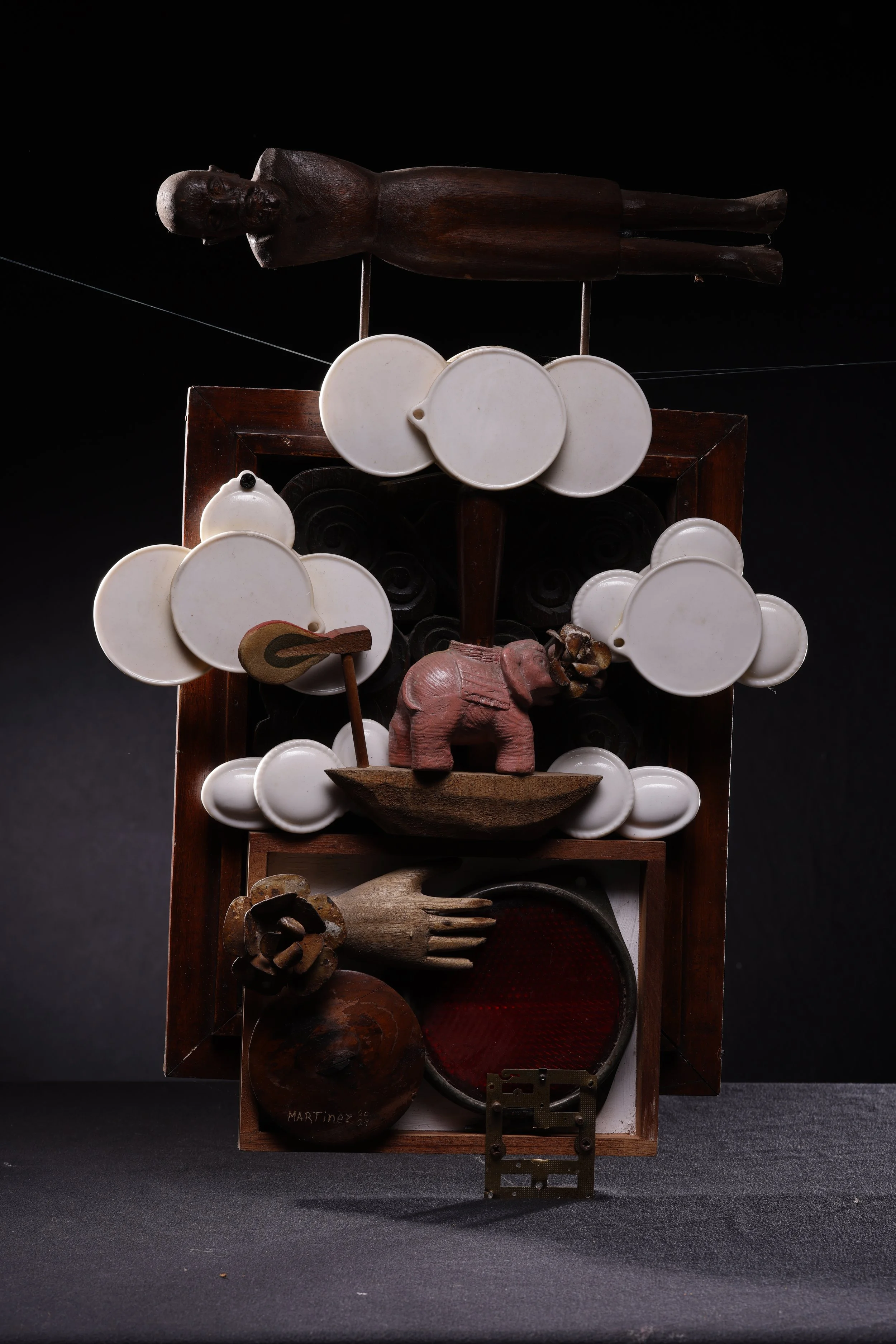
Glenn Martinez
DUNGAN
13 x 10 inches
Wood carvings, ceramics, metal and industrial fragments
2024
This assemblage invokes the Ilonggo belief in the Dungan, the vital life force that animates all beings and possesses the power to travel beyond the body. Within this indigenous worldview, the Dungan is both companion and double, capable of leaving the physical form to journey through the astral plane. It returns bearing the subtle residue of those encounters, shaping the balance of one’s spirit and strength.
The objects and fragments put together translate this metaphysical passage into a poetic assemblage. A carved human figure hovers in suspension, embodying the moment of spiritual projection. Below, a pink elephant sails across a field of ceramic clouds, each one a tactile representation of the intangible, a vessel of vapor rendered in fired earth. The contrast between weight and lightness, fragility and timelessness, mirrors the Dungan’s movement between planes.
In his process, the artist reanimates fragments of wood, carvings, metal, ceramics and reflectors, granting them renewed life and symbolic charge. This act parallels the Dungan’s own cycle of leaving, transforming, and returning. The work thus becomes a meditation on the persistence of energy, echoing Heraclitus’s vision of perpetual change and Carl Jung’s exploration of archetypes as bridges between the conscious and the unseen.
Dungan occupies a space where indigenous spirituality, philosophy, and psychology converge. It reflects on the unseen journeys that shape human experience and the quiet continuity that links material existence with the astral. This assemblage invites viewers to contemplate the infinite dialogue between body and spirit, memory and energy, the invisible motion of the Dungan that moves through all living things.
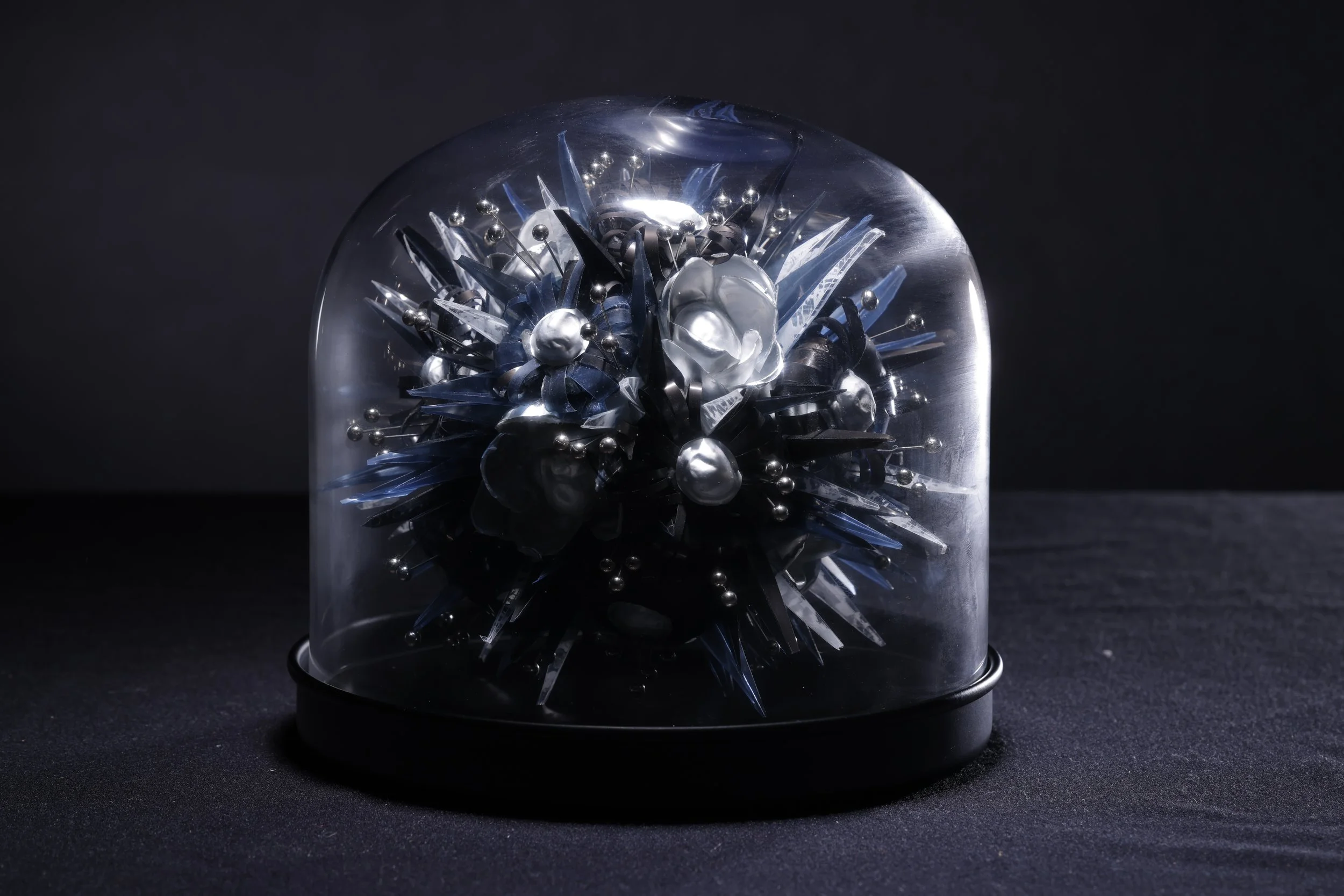
Chop Querijero
Medical History
6 x 6 x 6 inches
X-ray film, medication blister packs, found objects
2024
This piece reflects on the fragile space between recovery and loss. It captures the quiet joy of witnessing a loved one heal, and the grief and pain of losing someone who did not make it. Using medical materials and found objects, the work holds memory, care, and absence within a single form.
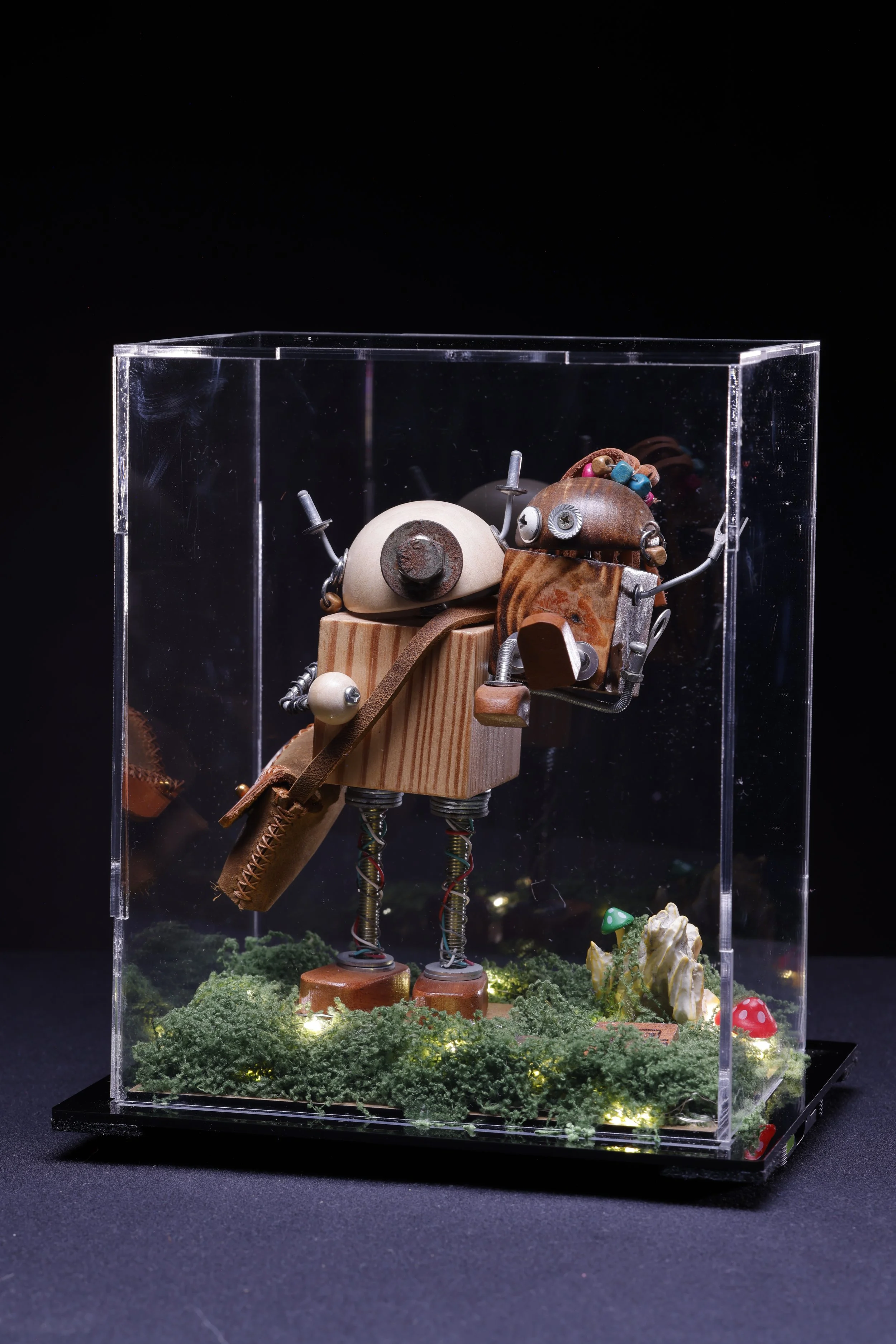
Madel Yu
Giant & Mimi
180 x 145 x 100 mm
Mixed media (wood, reclaimed hardware, leather, beads)
2024
Giant and Mimi are an inseparable robot duo born from fragments once considered leftover, broken, or forgotten. Crafted from offcut wood, old hardware, beads, and scrap leather, they embody the quiet beauty of second chances and the poetry of repair.
Giant’s story begins in abandonment. Once whole, he was left behind in a forest, slowly weathered by time and neglect. His wooden body bears the marks of age—scratches, uneven textures, and softened edges that speak of stillness and waiting. He is large, steady, and gentle, a presence shaped as much by absence as by material. Giant represents what happens when something useful is set aside, not because it has lost value, but because it has been overlooked.
Mimi, on the other hand, is a tinker by nature. Small, curious, and resourceful, she survives by collecting scraps—old screws, beads, bits of leather, pieces others no longer need. Where others see waste, Mimi sees possibility. Her body is a careful assemblage of found hardware and tactile details, each component intentionally mismatched yet harmoniously connected. Mimi is defined by motion and purpose; she is always searching, always building, always imagining what something could become.
Their paths cross by chance, but their bond is built by choice. Mimi finds Giant not as something broken, but as someone worth restoring. Through patience and care, she repairs him—not to erase his past, but to honor it. The act of repair becomes an act of companionship. Together, they transform from two solitary figures into a unified pair.
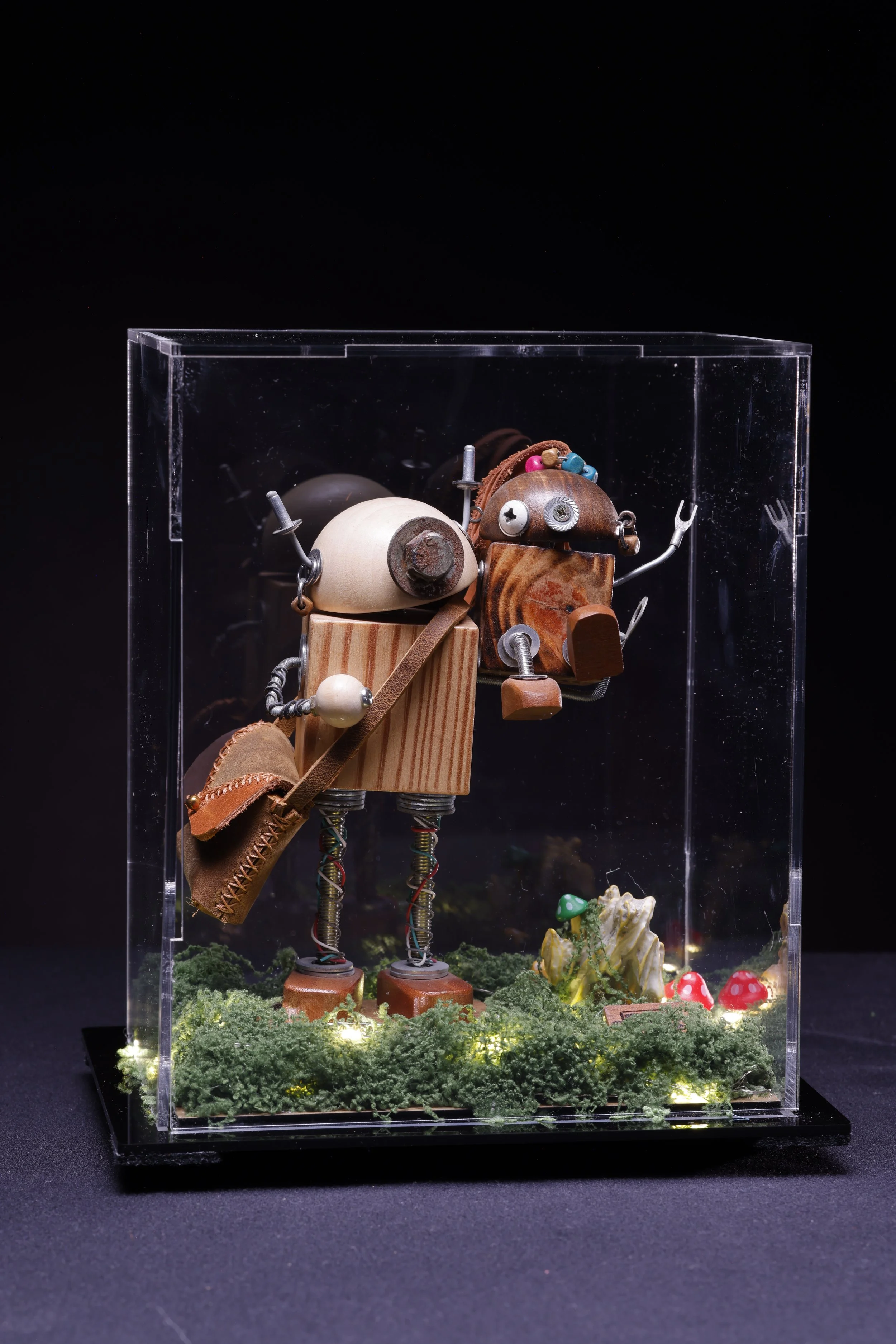
Now, Giant and Mimi travel together, symbolically journeying across places and stories in search of other forgotten robots. Their travels are not about collecting, but about connection—about reminding the world that even discarded materials carry memory, and even broken forms can hold meaning.
As sculptural pieces, Giant and Mimi invite viewers to look closer: at the textures of reclaimed wood, the weight of old metal, the softness of worn leather. More than objects, they are storytellers. They stand as a reflection on sustainability, empathy, and the human instinct to mend rather than replace.
In a world driven by perfection and newness, Giant and Mimi quietly ask a different question: “What if what we already have is enough?”
FROM CANVAS’ COLLECTION
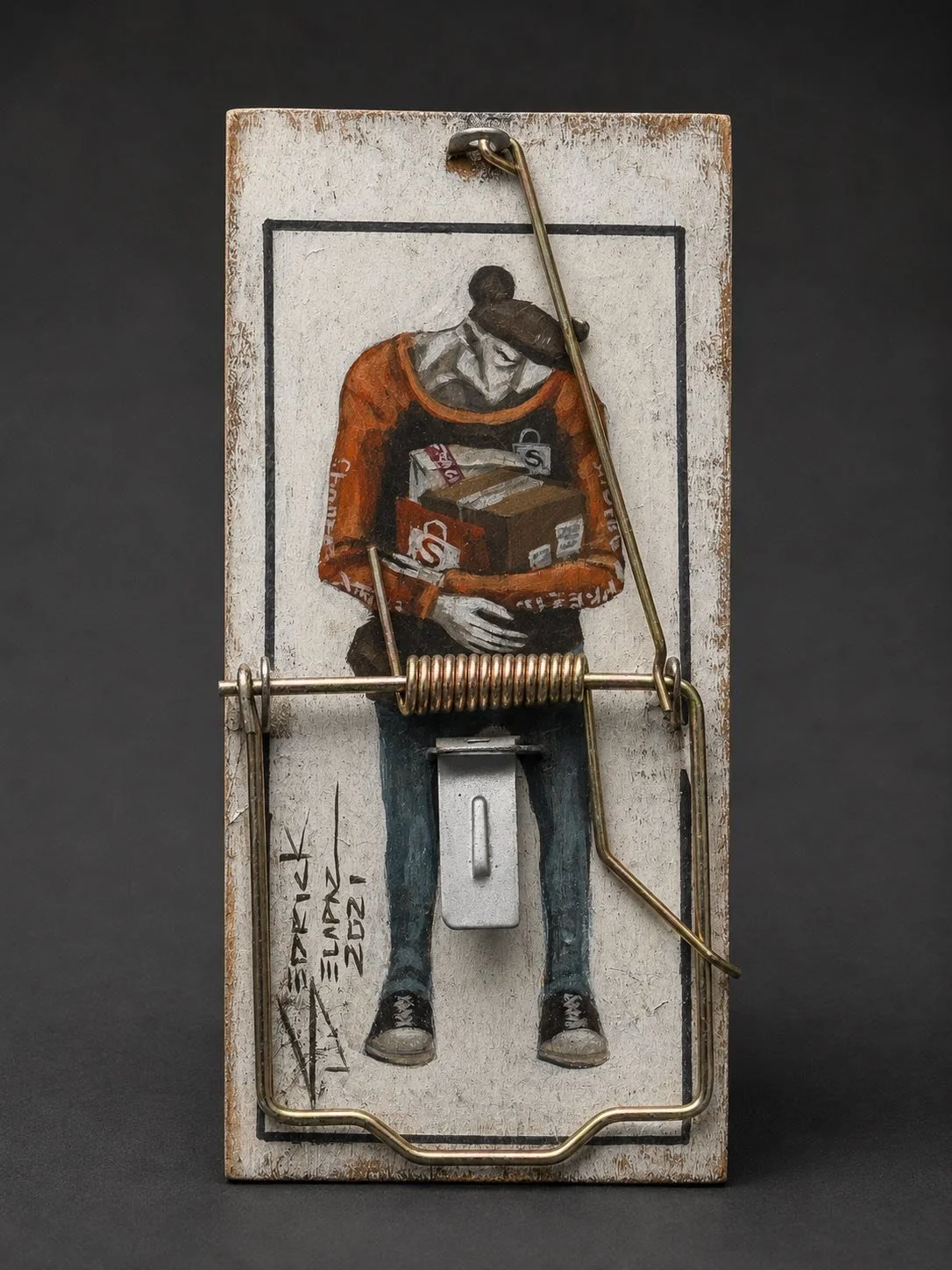
Cedrick dela paz
Untitled
Acrylic on mousetrap
6.15 × 3 inches
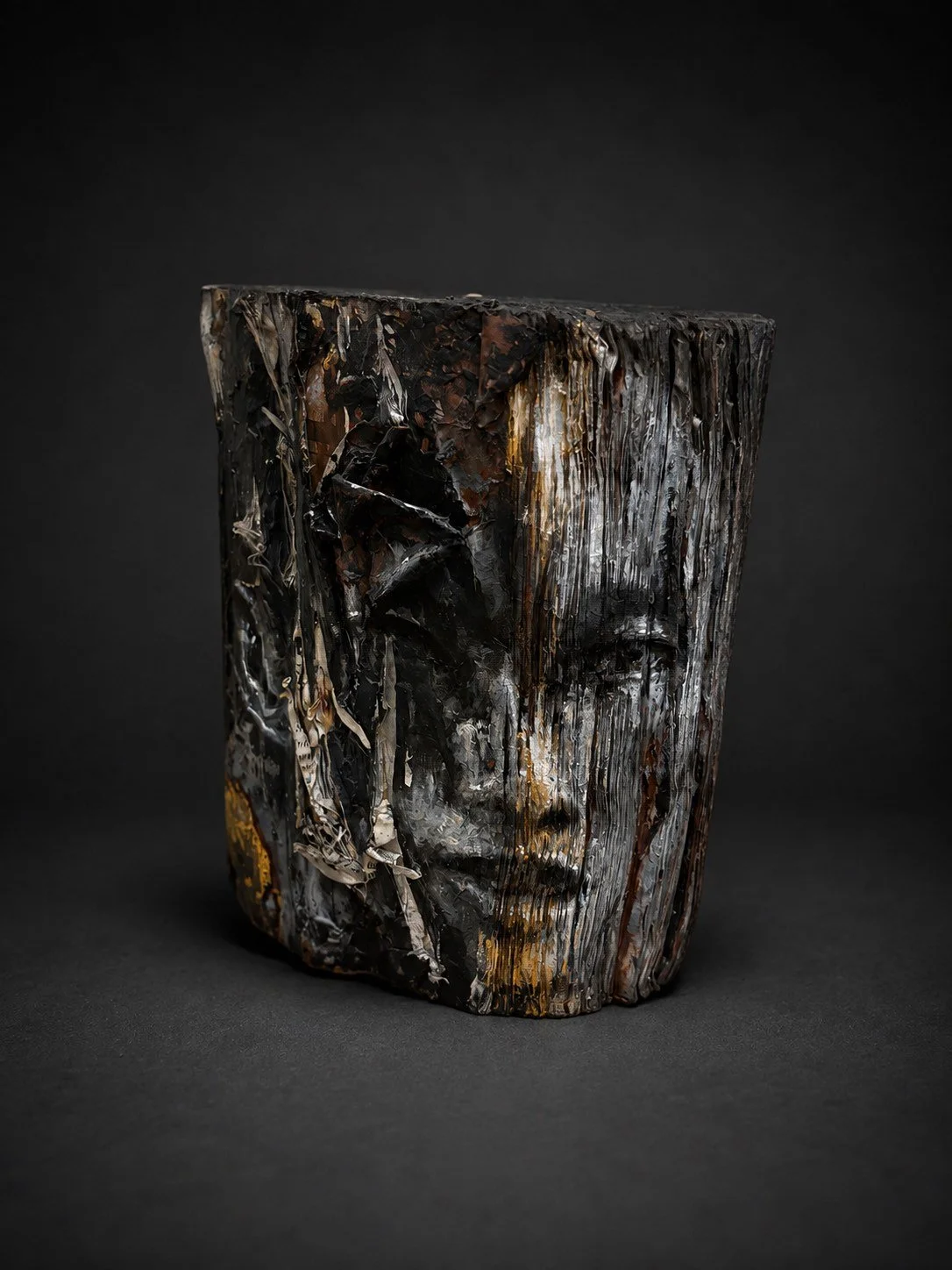
Martin Honasan
Contents
9 × 5 × 8 inches
Oil, acrylic, found book
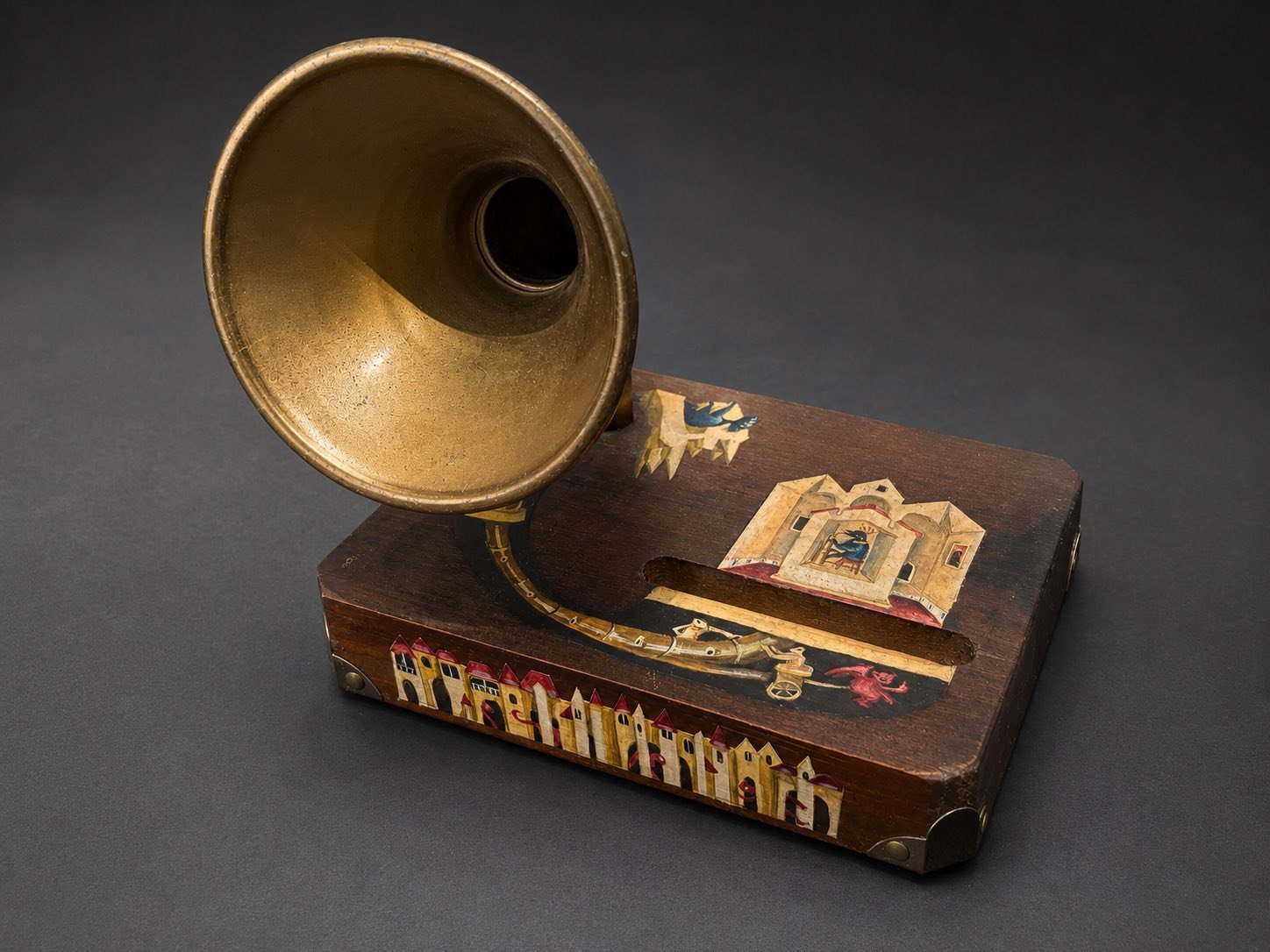
JERICHO MORAL
Untitled
Mixed media
7.5 × 7.5 × 5.5 inches
GP PEROS
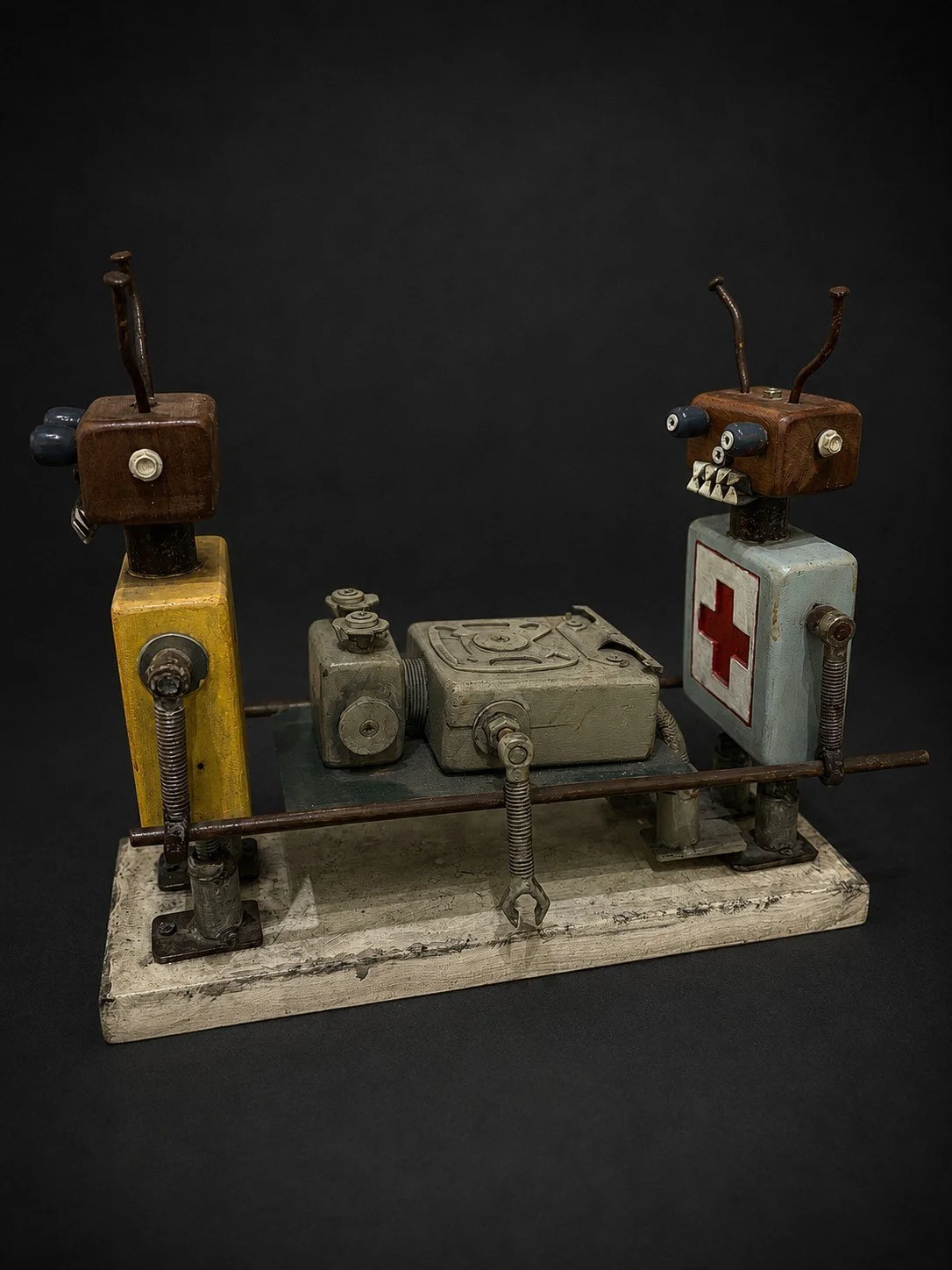
Robots
12 × 14 × 5.10 inches
Mixed media
PAM YAN SANTOS
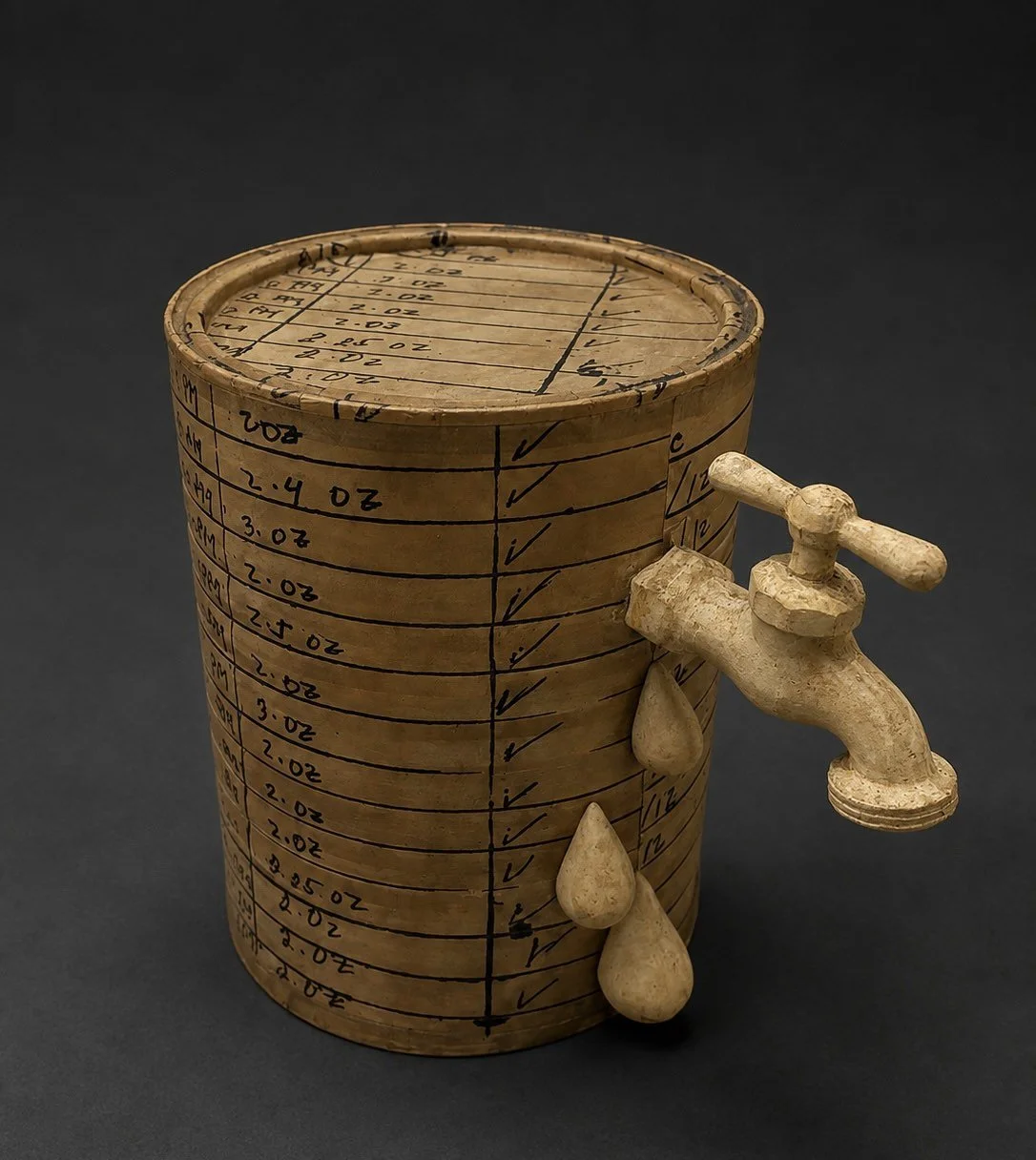
Untitled
Mixed media
8× 6 inches
MIMI TECSON
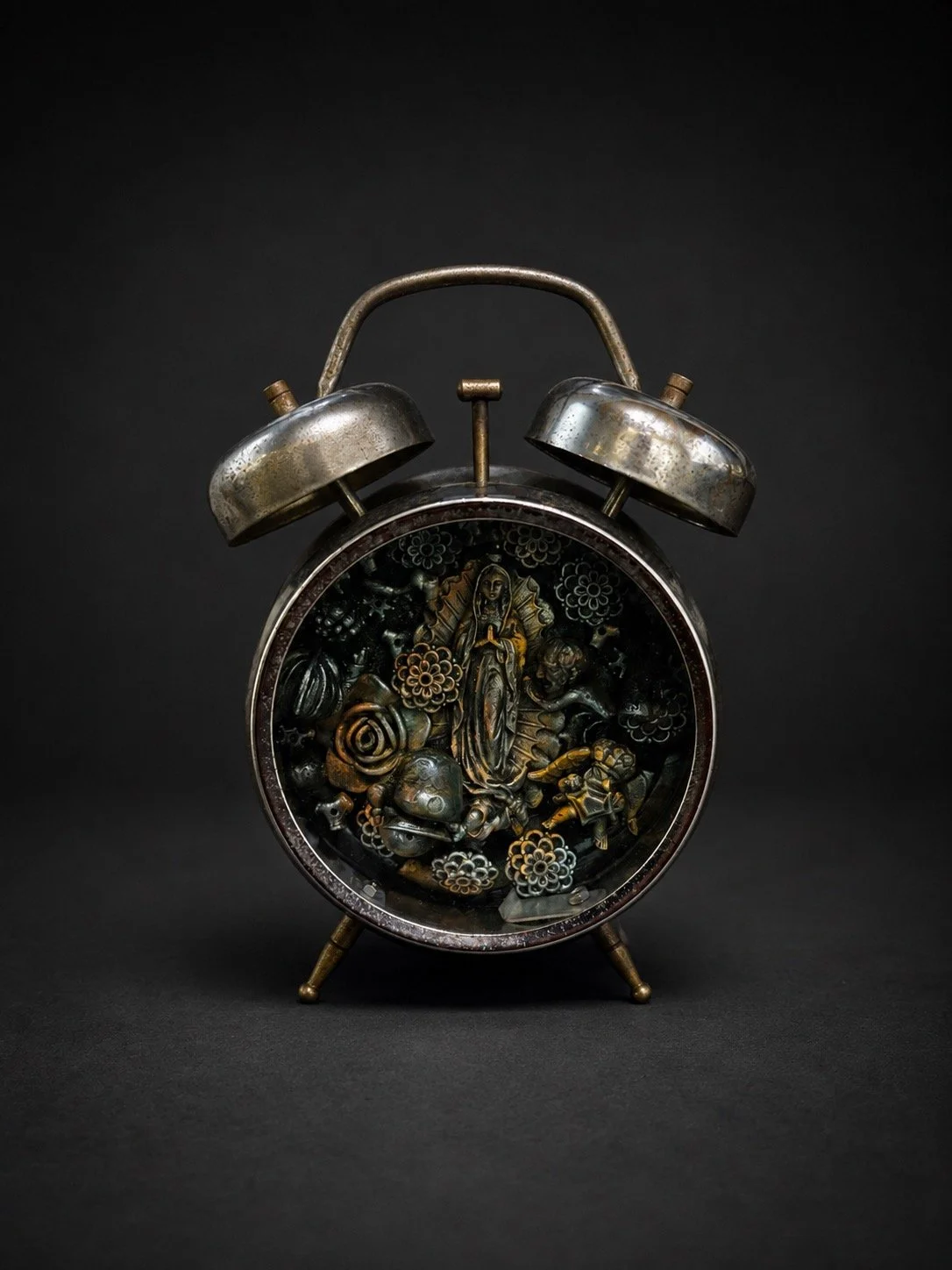
Clock
7.5 × 2.5 inches
Mixed media