
ABUBOT: Consumption, memory, and transformation
A special exhibit of the If Trees Could Talk International Art Biennale
EXHIBITION NOTESDownload a printable version of the brochure here.
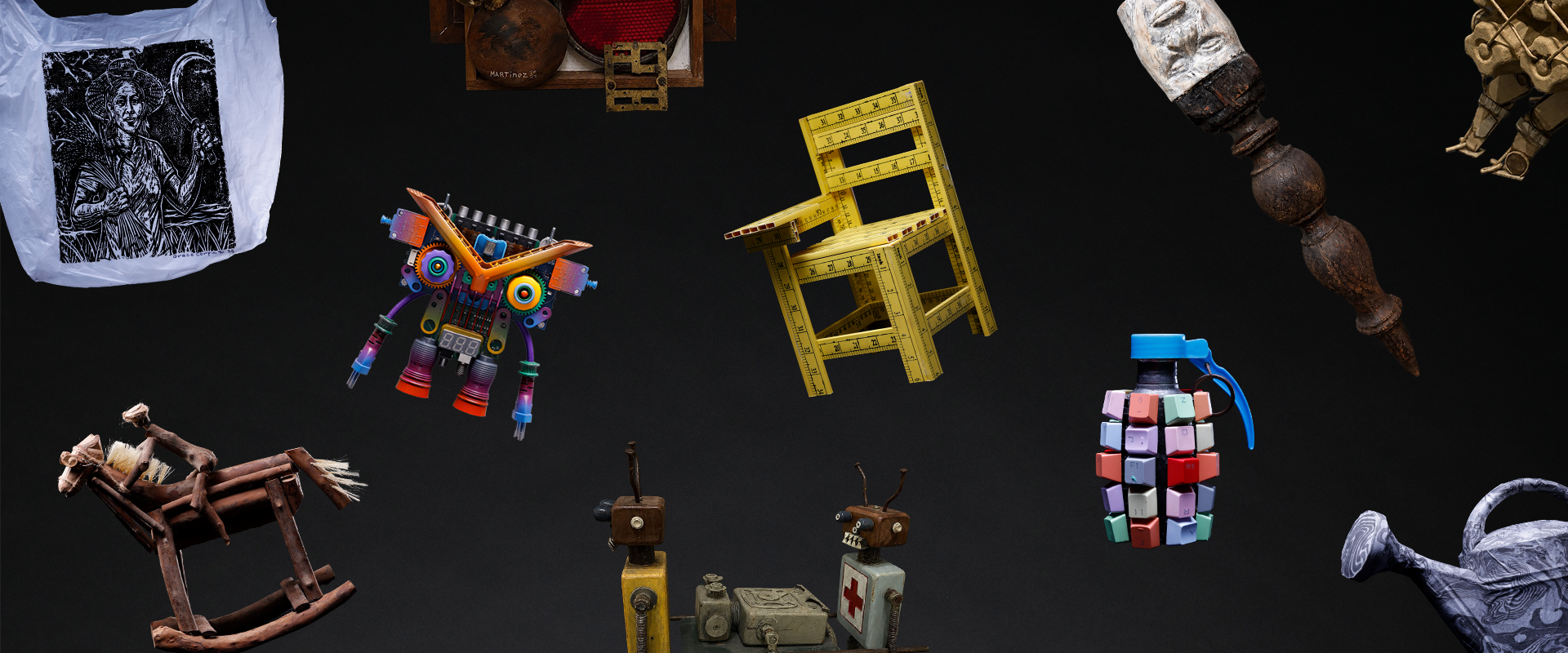
In Kanya-kanyang hagis, Oscar Floirendo takes pieces of an old keyboard and turns them into the outer shell of a hand grenade. In Lamang ang may alam, Bayani Galera fashions a classroom chair out of PVC meter sticks. Madel Yu and Lino Berro Jamisola construct robots made of electronic parts—screws, nuts and bolts, old wires—while Grace Corpuz, in Ugat ng Paggawa, Bunga ng Dangal, uses a plastic bag as the canvas for her linocut print of a Filipino farmer.
Far from their intended use, disparate objects have now all gone through a transformation, turned into pieces of art that carry new meaning and identity, reimagined and repurposed from their original form. New stories have emerged, like Nubbin Beldia’s The Dancer, bent from an ice cream scoop and metal fasteners, or Sebastian Cacho’s Ipis Apartment, built from cardboard, paper, and egg cartons.
As works of art, they have become vessels of memory and remembering, each piece an exploration of what our culture deems important enough to keep, or useless enough to throw away, especially in a time where it feels like things are no longer built to last; where repairing or reusing has become passé.
The artists of ABUBOT have breathed life into old objects, their works bridging the permanence of our earthly possessions and creations with the ephemeral nature of how we relate to them and what sentimental value they hold.
All but one of the artists hail from the Philippines. Gabriella Lindsay, a poet and fiber artist from Memphis, Tennesee who incorporates single-use plastics in her embroidery, sews florals on a trash bag in One Man’s Garbage. The resonance of her work is proof of the interconnectedness of our experiences as consumers in a world that prioritizes profit over people.
As we hang on to things that are special to us, what happens to them once we have passed? Conversely, where do they go once we discard them? Some end up in thrift stores, some simply become part of growing mountains of trash from decades of overconsumption.
ABUBOT is an invitation to take these objects and make them new, to remember that we already have everything we need, and that art is found in the everyday if we know where to look.