
Artwork Spotlight: 'The Hymn of Leaves' by Chad Montero
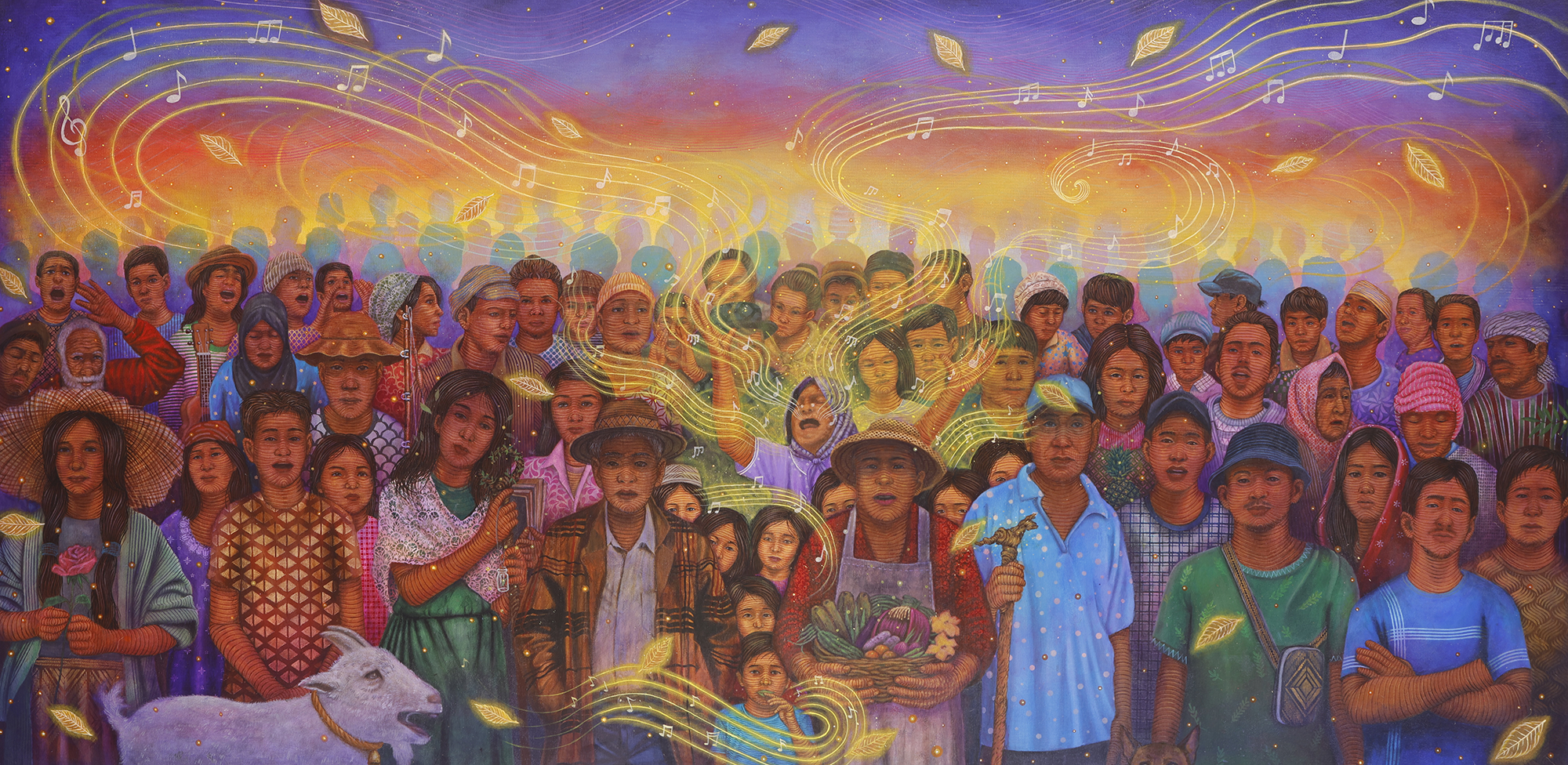
“Isang Tinig.” 2026. Acrylic on canvas. 48 × 91 in.
The Hymn of Leaves, penned by Katrina Macapagal and illustrated by Chad Montero, is a heartwarming and rousing tale of hope, the power of song, and solidarity. The winner of the 35th Romeo Forbes Children’s Story Writing Competition, The Hymn of Leaves tells the story of Sinta, a young girl who lives in Sigasig, a town where singing is forbidden.
Inspired by her country’s own history, Katrina Macapagal wrote the story in late 2022. “When CANVAS’ call for entries for a children’s story based on Chad’s painting ‘Sipol’ came out,” she said, “the Philippines was just a few months into Bongbong Marcos’ presidency. Like many Filipinos, I was in complete shock and disbelief over the return of the Marcoses into power. One of the things I heard myself and other people asking was the question: How will we explain this to our children?”
Her story was selected from 239 entries by the book’s illustrator, visual artist Chad Montero. Influenced by his upbringing—his mother and grandmother were traditional folk healers—Montero’s paintings speak of a distinct visual language that is, at once, familiar and comforting to the Filipino eye.
Here, we spoke to him about his inspiration for the contest piece, why he chose Katrina’s story, and why it’s important for children to be able to read stories like this.
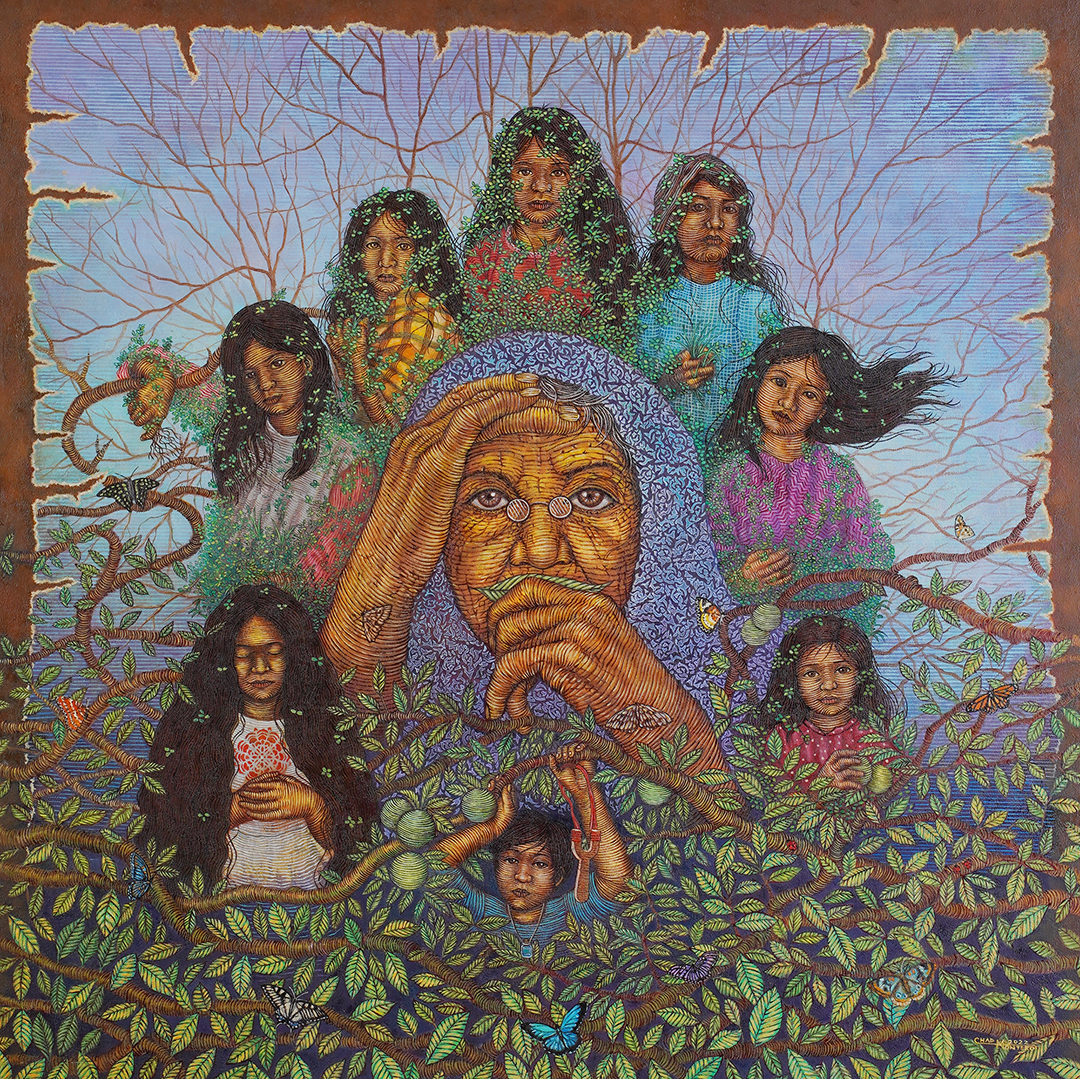
“Sipol.” 2022. Oil on canvas. 48 × 48 in.
What inspired the contest piece?
It was actually in 2019, during my first solo show at CANVAS Gallery, where I exhibited the works I had produced during my 2018 art residency at Katnig in Ibaan, Batangas.
During the exhibition, Sir Gigo Alampay invited me to create a contest piece for a children’s book. He asked me to prepare three studies or sketches from which one would be selected as the contest entry. I submitted the studies in 2020. Sir Gigo had already chosen which one would be used as the contest piece, but I was not able to immediately work on the painting because of the pandemic, as well as other exhibition schedules and deadlines.
Hanggang sa dumaan ang 2022 elections. Maraming mga pangyayari ang dumaan at nasaksihan (pandemic, health crisis, kapabayaan ng gobyerno, kahirapan, EJK, drug war, red-tagging, fake news, election campaign, historical distortion, etc.) na nagparealize sa akin sa kitatayuan ngayon ng bansa.
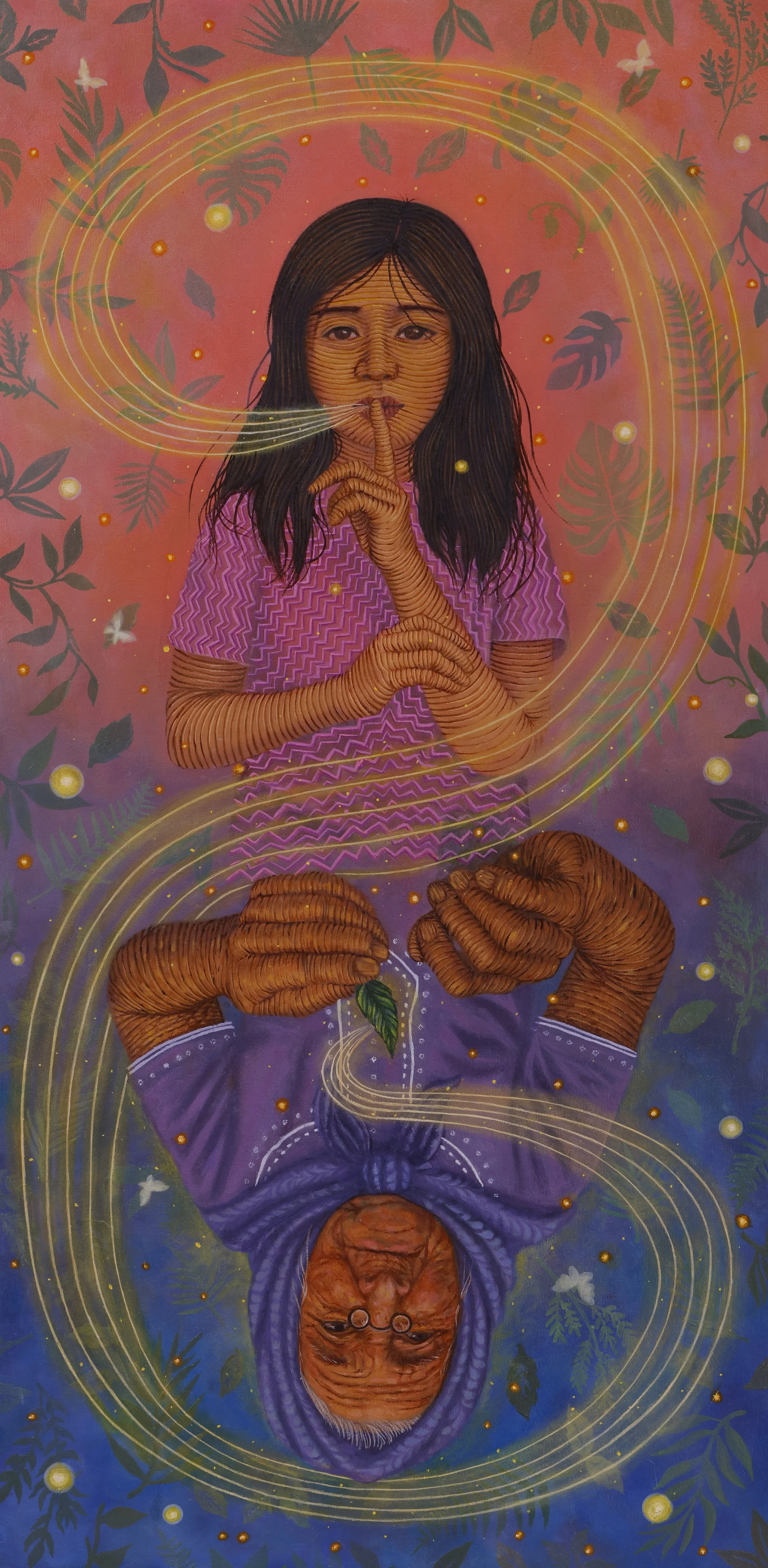
“Marahuyo.” 2026. Oil on canvas. 48 × 24 in.
Napansin ko din na noong nakaraang administrasyon, napakalakas ng machismo. Ikinulong si De Lima, tinira ng fake news si VP Leni, si Hontiveros, si Maria Ressa ng Rappler. Sa kabila din nito umangat ang bayanihan nang itatag ni Patricia Non ang Community Pantry, nakamit ni Hidilyn Diaz ang unang gintong medalya natin sa Olympics.
Dahil dito naisip kong gumawa ng bagong contest piece. Hindi nasunod ang napiling sketch. Nagpinta ako ng walong batang nakapalibot sa isang matandang babae na may hawak na dahon sa kanyang labi. Pito ang batang babae at isa ang lalaki. Hindi ko masyadong inisip ang kahulugan ng painting dahil alam kong hindi naman ito masusunod at babase ang produksyon ng mga painting sa mananalong kuwento.
Gayunpaman ang dahon na hawak ng matandang babae ay inspired sa mga artworks ko na patungkol ang tema sa makalumang panggagamot. Ang mama ko kasi ay dating albularyo. Si Sir Gigo ang nagbigay ng title sa contest piece na “Sipol.”
What was it about “The Hymn of Leaves” that made you choose it as the story? What resonated with you most?
I also had a hard time choosing between the two stories that were given to me to read. Both were beautifully written. But perhaps The Hymn of Leaves more strongly captured its relevance to what is currently happening in the country—the seeming repetition of history, ang patuloy na pagpapatahimik at pananakot sa mga taong gustong magreklamo o maglabas ng saloobin, ang pagbabalik ng Marcos sa pinakamataas na posisyon ng gobyerno, at ang lalong paghihirap ng mga Pilipino.
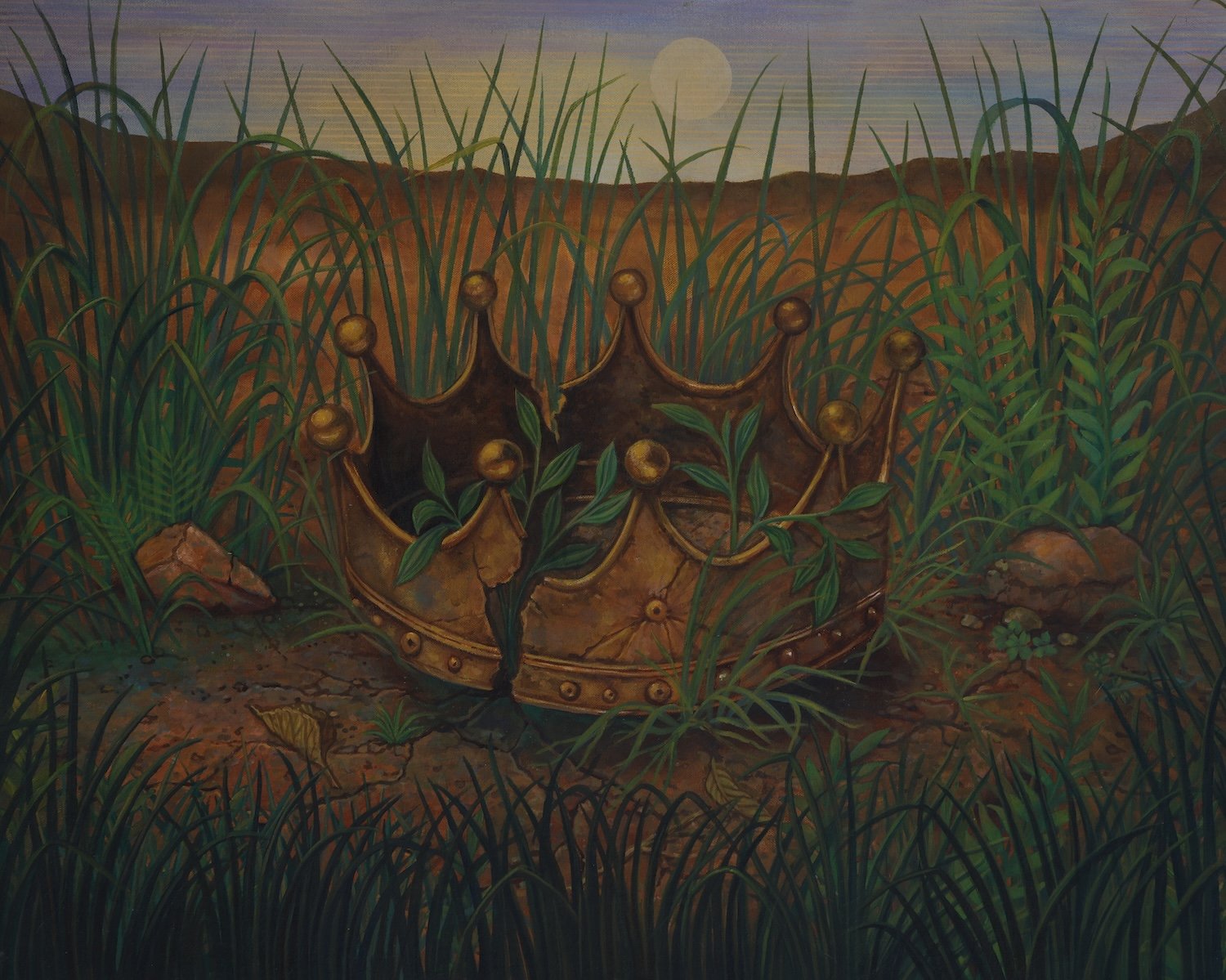
“Lipas.” 2026. Acrylic on canvas. 24 × 30 in.
Was there a piece that you found more challenging to illustrate than the rest? Was there one that came more easily to you?
There were many challenges in creating and illustrating the scenes in the story. Of course, the largest one, “Isang Tinig,” was particularly challenging because aside from being the biggest in size, it also contains the most people and elements. I had to think about how to properly depict the scene where the people gathered and surrounded the children and the old woman.
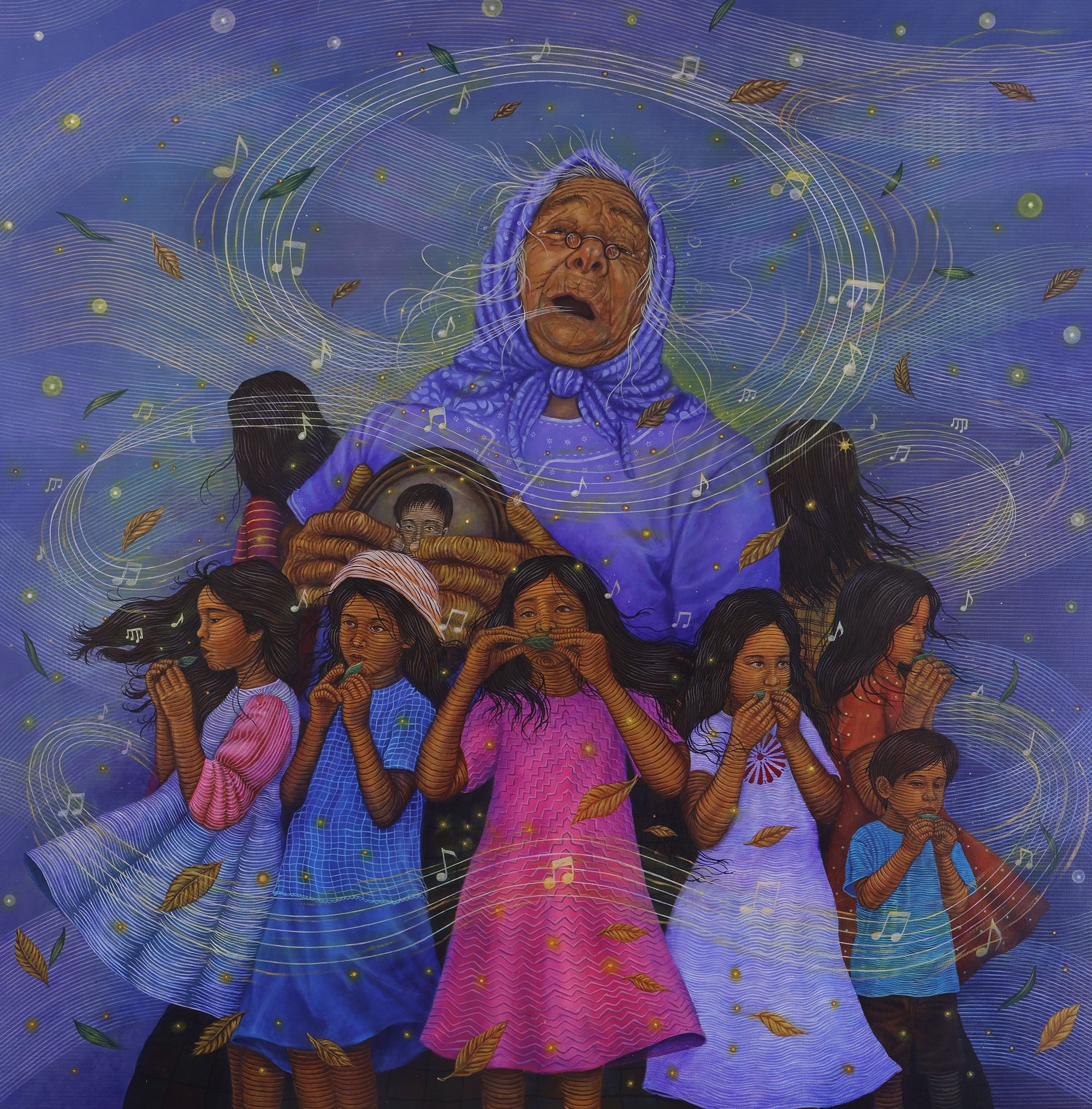
“Kumpas.” 2026. Acrylic on canvas. 48 × 48 in.
“Kumpas” was also challenging because it is the climax of the story, where the eight children ran around and surrounded the old woman while playing the leaves to prevent the guards from hearing or being able to determine where the old woman’s singing was coming from. Pinakamahirap kasi na part ng paggawa ay kung paano i-conceptualize at i-co-compose ‘yung part ng kuwento sa isang painting na maipapakita mo ‘yung sinasabi sa isang senaryo sa lebel na maiintindihan ng mga batang mambabasa.
Kung may piyesa na madaling natapos ito ay ang “Huni” at “Dinig.”
Tell us about the color palette. What drew you to choose these colors?
I wanted the painting to be colorful because I know that children are drawn to colorful images. I wanted to make them more interested in reading the book by creating colorful illustrations filled with many painted figures.
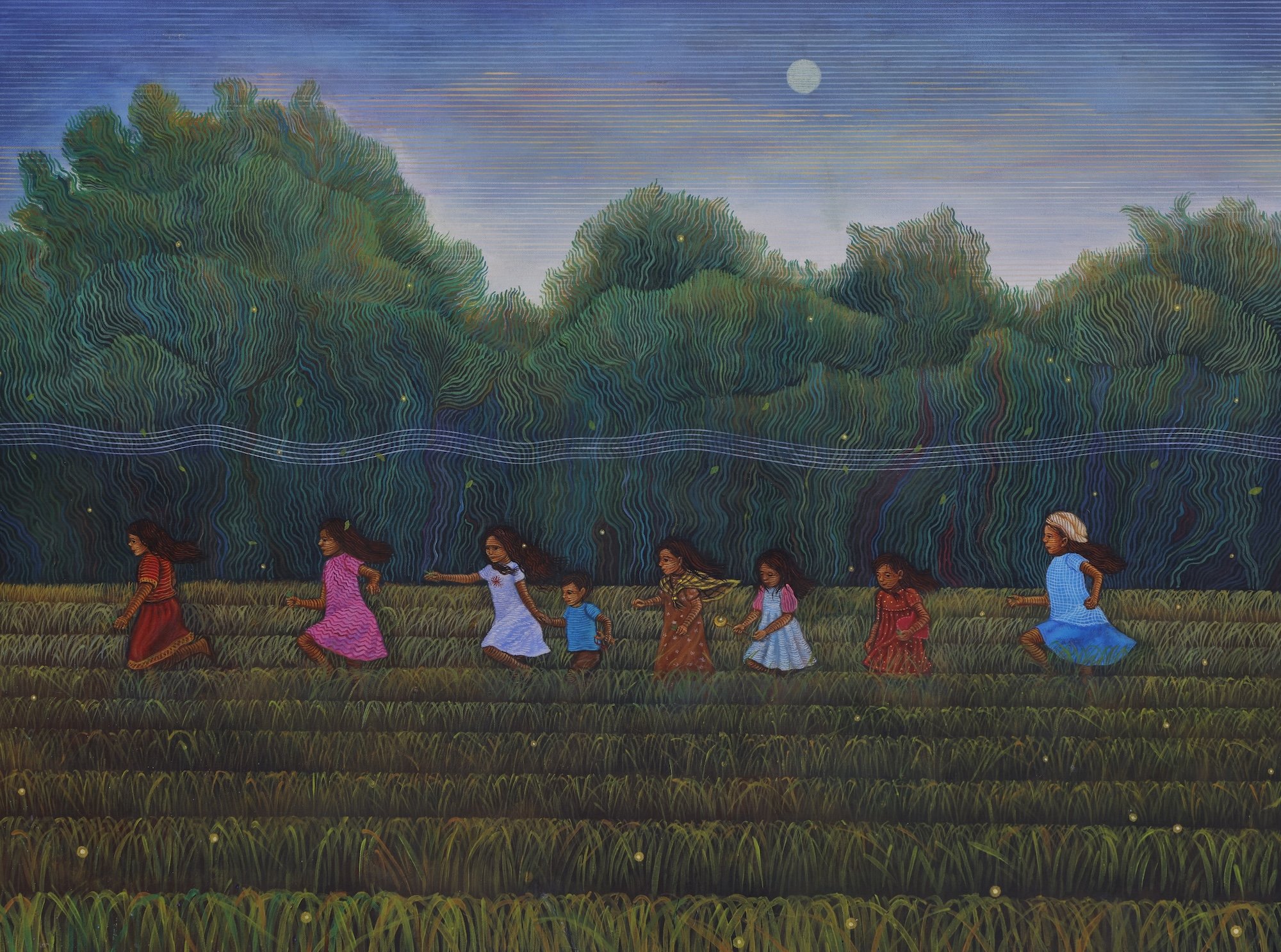
“Dalagan.” 2026. Acrylic on canvas. 30 × 40 in.
I made the story colorful and magical while still preserving its deeper meaning and reflection of the past. May lalim ang laman ng kuwento ni Katrina Macapagal, so to create a balance and make it more accessible to children, I thought of making the illustrations colorful.
This also adds other layers to the story—something that looks happy and playful on the surface but has another story behind it. Marami rin sa bahagi ng mga paintings ay dominated ng berde dahil sa senaryo ng gubat at kabundukan, and to make the fantasy and musical effects more effective.
How important is it to tell stories like The Hymn of Leaves to children?
Mahalagang maipabasa sa mga kabataan ang mga ganitong kuwento na magtuturo ng kahalagahan ng nakaraan kagaya ng kasaysayan. Ipinapakita rin ng libro ang totoong diwa ng pagkakaisa, na maaaring makamit ang pag-asa at kalayaan kapag nagsama-sama ang boses ng mamamayan. At higit sa lahat ang pagtindig sa tama.
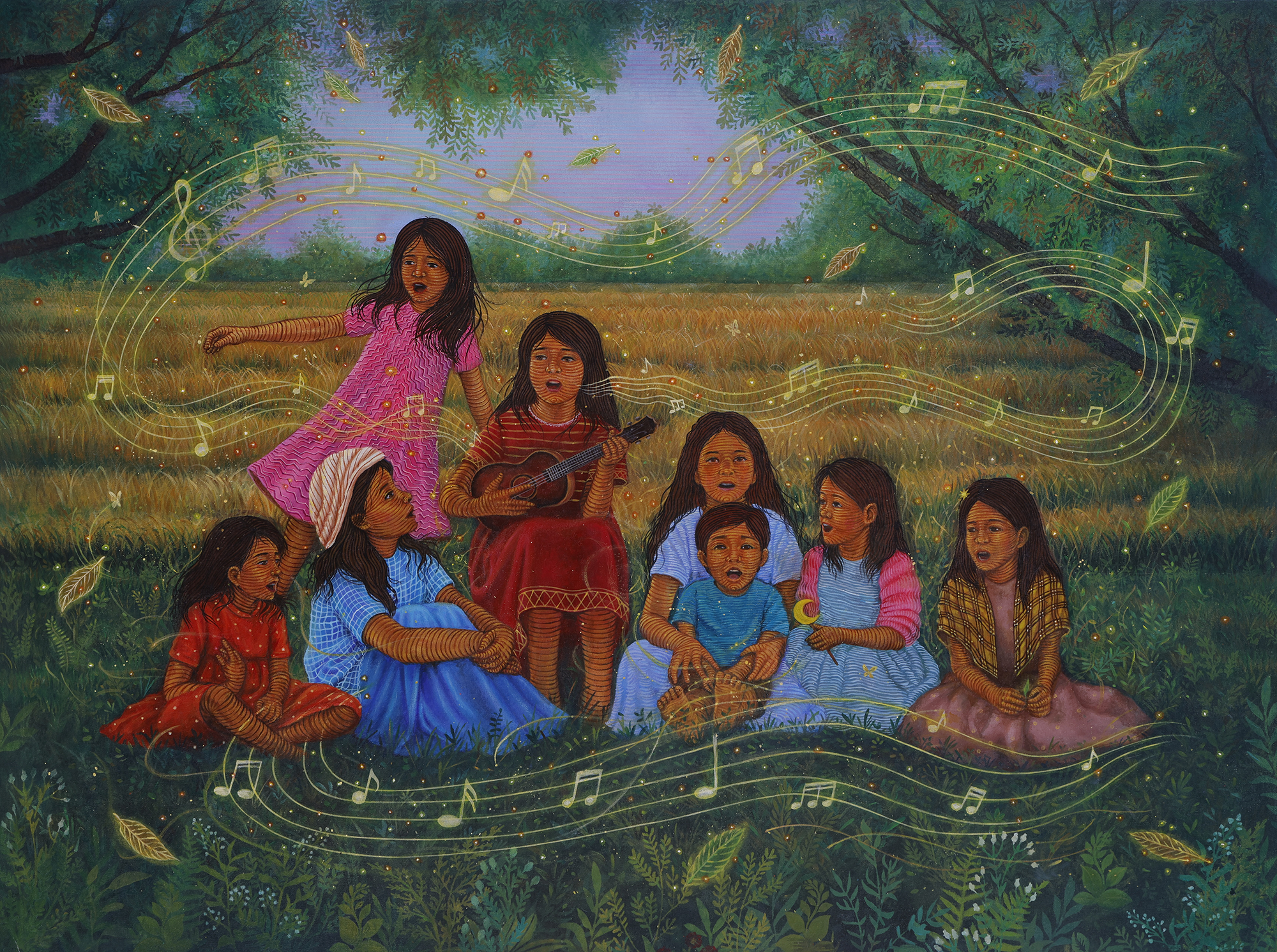
“Koro.” 2026. Acrylic on canvas. 36 × 48 in.
What is your message to young readers who will come across the book?
Maraming salamat sa pagbasa sa aming aklat. Ipagpatuloy at ugaliin ang pagbabasa kasi ito’y makatutulong sa pagpapatalas at pagpapalawak ng ating kaisipan.
Nawa’y ma-inspire kayo sa aming aklat at magkaroon din ng interes sa pagsulat ng mga kuwento o gumuhit at magpinta ng mga maiisipang magagandang bagay. Maging malikhain tayo at kulayan natin ang buhay.◾️
About the artist
Chad Montero was born and raised in Antipolo City, with roots in Camarines Sur, Bicol. He graduated from the College of Fine Arts at the University of the Philippines.
His mother and grandmother were traditional folk healers. As a child, he often listened to his mother’s stories about mystical and magical experiences. These early influences inspired him to create artworks that tell stories of childhood memories, folklore, traditions, culture, and history.
Through his art, he hopes to preserve and document these stories for future generations.
About the author
Katrina Macapagal is a Filipina-British writer who lives in Edinburgh, Scotland with her daughter and husband. She likes writing stories for children and adults alike. She believes in the power of storytelling to shape our ways of thinking about and being in the world.
The Hymn of Leaves is a product of the Romeo Forbes Children’s Story Writing Competition. The Center for Art, New Ventures, and Sustainable Development (CANVAS) holds the competition at least twice a year, open to Filipinos worldwide. The first and only of its kind, it invites writers to pen a children’s story inspired by a painting or sculpture by a local Filipino artist. To learn more, visit canvas.ph.
