
Art is political: Sijelo Collective, UK
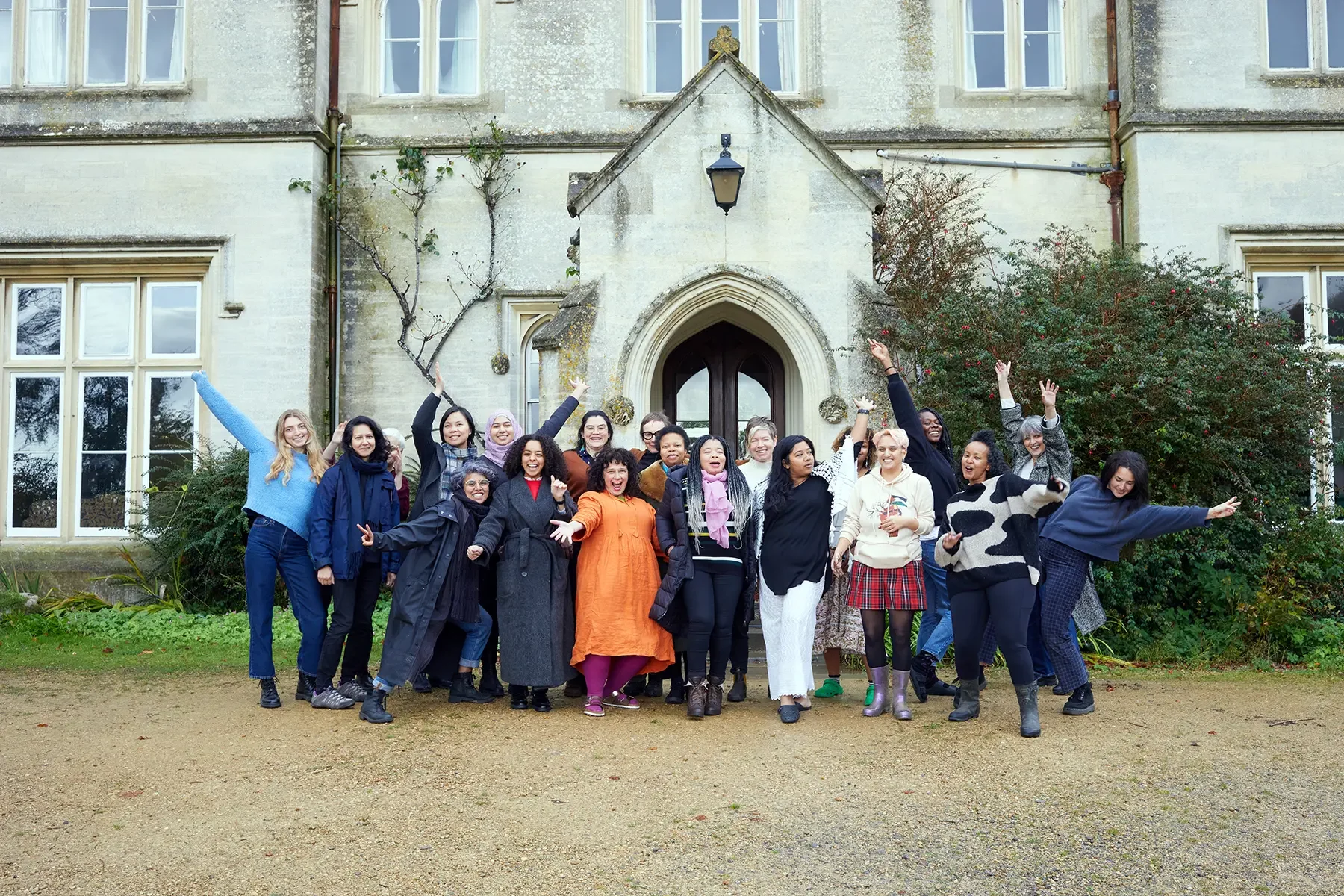
Artists, creatives, and activists gathered at a retreat facilitated by Counterpoint Arts. Photo via counterpoints.org.uk.
AS PART OF A SERIES OF FEATURES ON THE IF TREES COULD TALK INTERNATIONAL ART BIENNALE, MARAHUYO ART PROJECTS SPOKE TO SIJELO COLLECTIVE, A GROUP OF ARTISTS, CREATIVES AND ACTIVISTS DEDICATED TO ADDRESSING THE INTERTWINED CHALLENGES OF DISPLACEMENT, RACIAL JUSTICE, AND CLIMATE JUSTICE.
The womxn* of Sijelo Collective first gathered in 2023 at a retreat in Hawkwood College facilitated by Counterpoint Arts. In this interview, the artists involved in the biennale talk about using creativity as a tool for social change, the questions that brought them together, why art necessitates intersectionality, and how they find hope in a time of growing authoritarianism.
Photos courtesy of Sijelo Collective
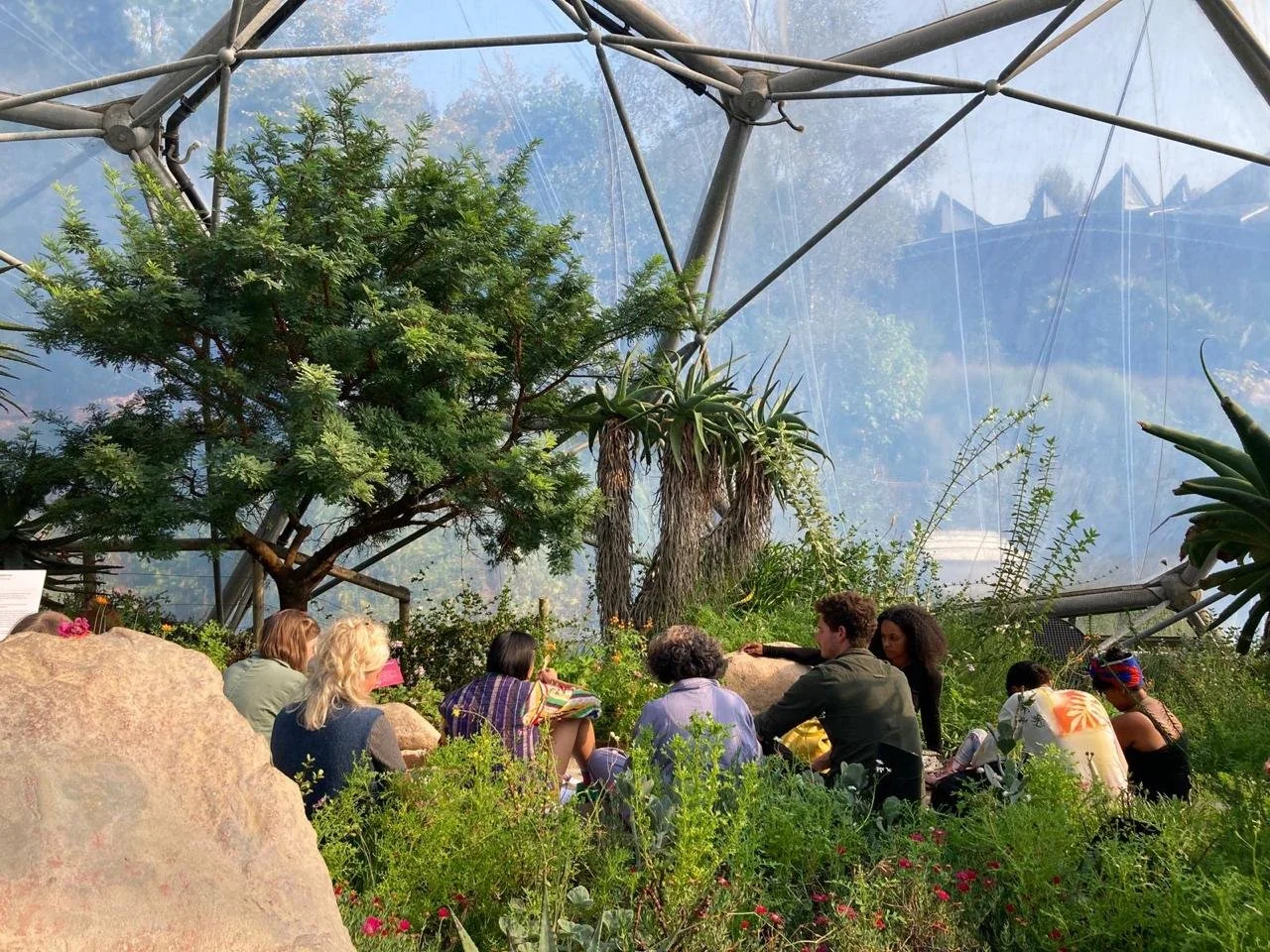
Spending time outdoors and with each other. Photo courtesy of Anna Dermitzaki
How did Sijelo Collective come to be?
Tasnim Siddiqa Amin: We came together in 2023, after October 7th, as artists connected on issues of border violence and climate justice, the plight of the Palestinian people weighed heavy on us, and weighed heavier still for those of us who are racialised and Muslim (like myself).
Before we came together for the retreat at Hawkwood, most of us did not know one another, certainly not in the intimate way we do now, so initially we censured ourselves in a climate which demanded condemnation before compassion: “Do you condemn Hamas?” “Israel has the right to defend herself.”
In this context many of us felt we had to keep our outrage private. We attempted to bear witness but we didn’t know yet what our role would be in this new era of ramped up authoritarianism. These are the questions I entered with. What is my role in the resistance at the heart of Empire? How do I justify the work that we do amidst a genocide? Am I alone in this? I’ve come a long way since that first gathering, indeed, we came a long way during that gathering. It was but two nights but in that time I found a community of artists grappling with these same questions.
WHAT IS MY ROLE IN THE RESISTANCE AT THE HEART OF EMPIRE? HOW DO I JUSTIFY THE WORK THAT WE DO AMIDST A GENOCIDE? AM I ALONE IN THIS?
Sovay Berriman (SB): At the initial gathering conversation also focused on the intense persecution and genocide in Gaza and the West Bank, which was highly visible on social media platforms in November 2023. The collective shared an aim to support each other and Palestinian artists in the UK, addressing the cancellation of events like the Palestinian Film Festival in Bristol. We also shared talk about the rise of division, misogyny and racism in the UK, and the harm caused by performative but unsubstantial responses of many arts organisations to the Black Lives Matter demonstrations of 2020.
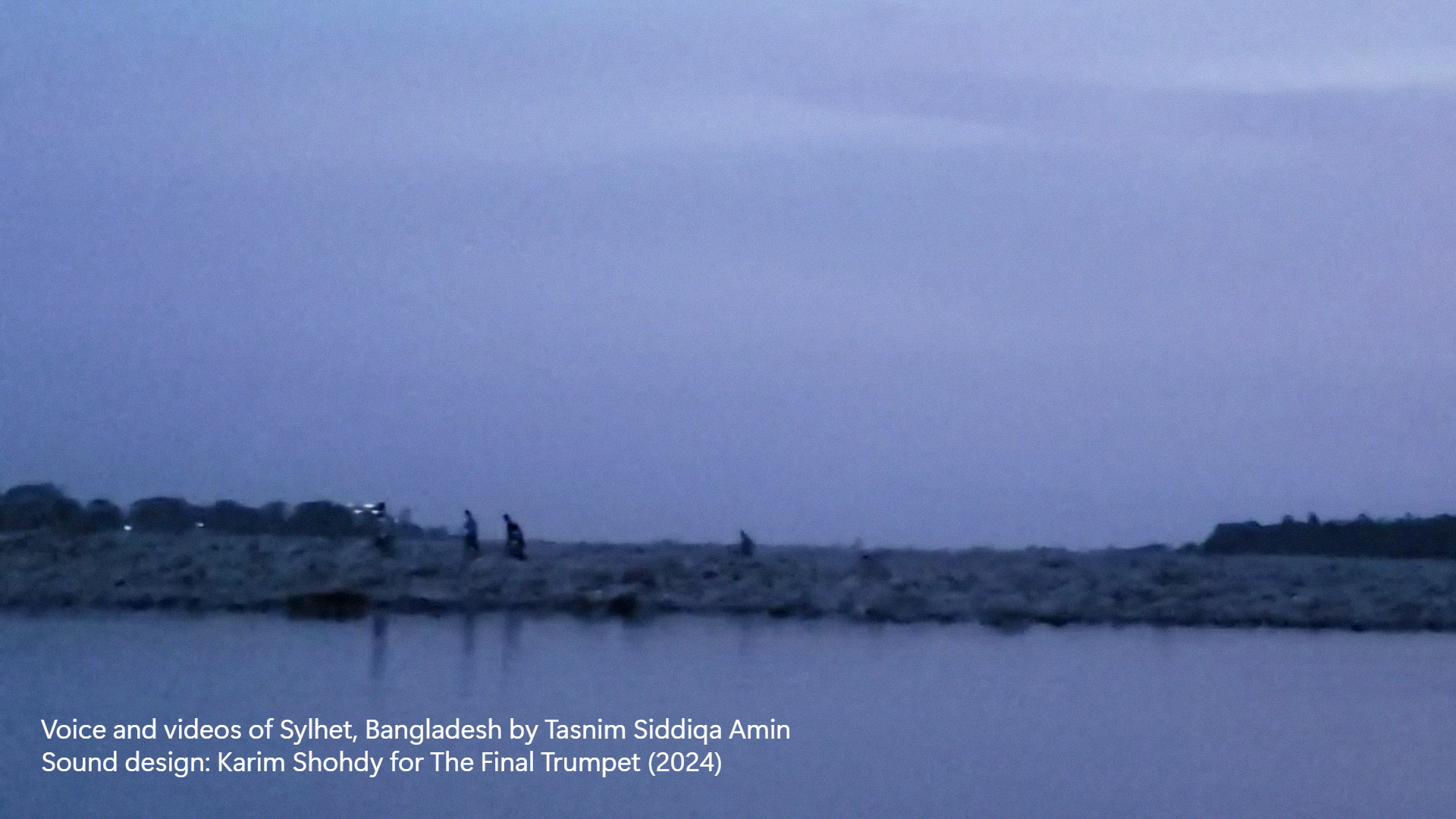
A preview of The Final Trumpet by Tasnim Siddiqa Amin
You are a collective focused primarily on the intersection of climate justice, racial justice, and displacement. What questions did your collective seek to answer during its time of creation? What questions emerged from those answers that you continue to explore in your work?
Kim Chin (KC): A multivocal, holistic and interconnected art practice is the best way for me to make art that meets the times we are in; intersectional experiences, mind-body-emotional health, anti-racist, climate-responsible, intergenerational and reimagining a different value system that counters the harm of capitalism and individualism.
Fascism thrives on authoritarian leadership leading people who are ignorant, lonely, angry and detached from their own responsibility in creating change. How can social practice create a space for many voices to belong and bloom in both an imaginative and practical way - what can we learn from history and each other? Humans and nature have the answers, we just need the will.
HOW CAN SOCIAL PRACTICE CREATE A SPACE FOR MANY VOICES TO BELONG AND BLOOM IN BOTH AN IMAGINATIVE AND PRACTICAL WAY? WHAT CAN WE LEARN FROM HISTORY AND EACH OTHER?
Why is it important for your collective to be trans-inclusive?
SB: Our work is human-inclusive, and trans inclusion is a fundamental aspect of this.
KC: Our work is queer- and trans-inclusive because being attuned to many ways of being is a gift. We do not choose how we arrive in this world or the social ecology we are born into: it is our responsibility to share power and leverage privileges we may have to support those who have less access, resources or perceived sociopolitical currency.
As I am learning more about kapwa - seeing yourself as others - our biggest hope is to model our strategies for survival from nature where different forms of life contribute to a wider whole.
Our work is human inclusive, and trans inclusion is a fundamental aspect of this.
How did you discover the biennale? Why did it resonate with you?
KC: The biennale open call appeared on my Instagram feed and I thought this opportunity was an accessible way for our previously unnamed collective to create together as the principles spoke to the ethos of what our group is connecting over. To be visible to a global web of climate-just artists and collectives through a cultural platform rooted in the Philippines truly resonated.
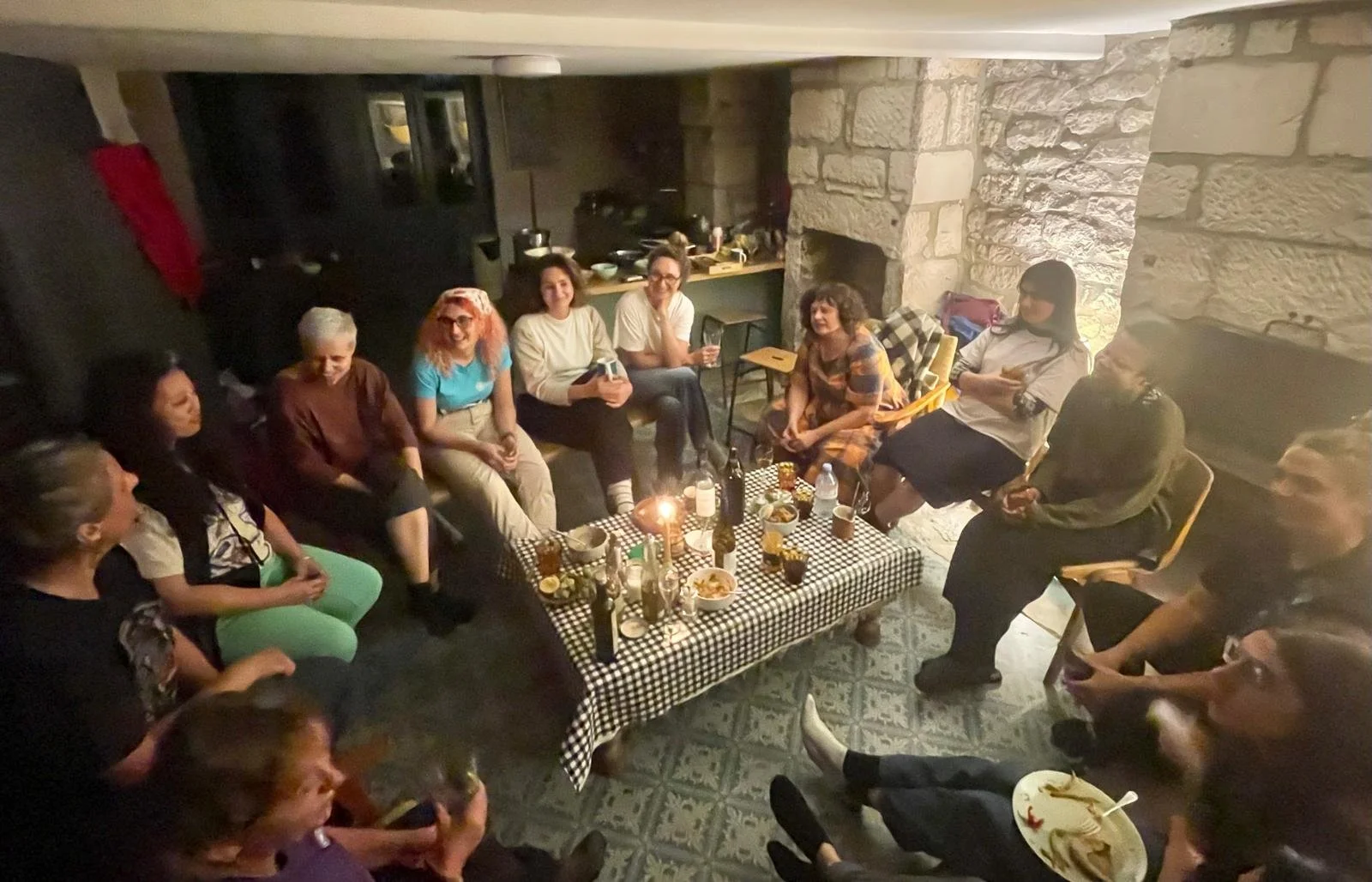
The retreat that birthed Sijelo Collective was intergenerational and multidisciplinary, gathering creatives and activists from various practices.
How do you find hope – especially through art and your work – amidst destruction and suffering?
SB: I find hope through my relationship with the non-human world, my heritage, and the persistence of my Kernewek/Cornish culture. Being part of [Sijelo Collective], the relationship we have, also provides hope. We are supportive and united, this is powerful and motivating, especially in the face of destruction and suffering.
KC: I find hope in naming and facing the my own ignorance and sharing the process with others - whether that is diluted or partial connections to ancestry, lands and culture severed through migration and assimilation or atoning for my contribution to the climate crisis and systems of unequal labour when working for commercial textiles-fashion companies. Being vulnerable, uncomfortable, and proactive has helped me find others who have been generous with their journey too; people who demonstrate similar values, vision, and drive to fight for others as a key to our liberation. Creating and making has always been a tool to help me make sense of the world. When I was diagnosed with neurodivergence (ADD) as an adult, it unlocked the breadth and depth of how a visual language was necessary to feel myself more accurately as time to process buried or complex experiences - even if others didn’t fully understand beyond the productivity and what is perceived as “success” in capitalistic frameworks.
Why did you become an artist? How did your interest in your current practice began, and what keeps it going?
Kaajal Modi: A need to engage more deeply and sensorially with the issues affecting the world around me; a deeply held belief that there is important knowledge that systemic inequality and corrupt power structures cannot survive. Held by migrant communities (particularly women) in our rituals and everyday practices; the idea that power cannot survive when we all dream deeply and collectively of better futures. What sustains me are the communities I encounter and collaborate with through my practice, the wonder of overlooked ecological worlds; the incredible artists and organisers doing work that feels resonant with these aims across their own communities, whose important knowledges and embodied experiences are often overlooked, who maintain their integrity in the face of unrelentingly overwhelming odds. These are my people. This is what Sijelo is.
Boseda Olawoye (BO): I am a creative producer and consultant who specialises in co-creating socially engaged arts projects with, by and for diverse communities, young people and marginalised groups. I specifically use creativity as a tool for social change as this resonated with me as a black working class woman who has experienced racism, poverty and inequality. The work that I do, the people I work with and the impact it makes keep me going.
WHEN I BEGAN TO QUESTION MY ROLE AS A FILMMAKER, I NO LONGER WANTED TO TELL STORIES ABOUT OTHERS BUT WANTED TO BE ALONGSIDE OTHERS, AND CO-CREATE. WHAT KEEPS ME GOING IS A DESIRE FOR CHANGE, FOR A BETTER WORLD, OUTSIDE THE IMPERIALIST, WHITE SUPREMACIST, CAPITALIST, CIS-NORMATIVE PATRIARCHAL TOXIC SOUP IN WHICH WE SWIM RIGHT NOW.
Anca Dimofte (AD): Curiosity, playfulness, music and dance became early on ways for me to reclaim autonomy as a child and connect with others. My practice shifted a few years ago from documentary filmmaking to socially engaged art. When I began to question my role as a filmmaker, I no longer wanted to tell stories about others but wanted to be alongside others, and co-create. What keeps me going is a desire for change, for a better world, outside the imperialist, white supremacist, capitalist, cis-normative patriarchal toxic soup in which we swim right now.
Jelena Sofronijevic (JS): I often say that I do not come from a conventional arts background, referring to formal and institutional understandings of learning and education. I encountered material cultures from the Balkans in my childhood, and particularly in the different textiles that lay beneath our everyday experiences - tablecloths for communal eating, dresses and costumes for dancing. It was only later that I encountered the fibre installations of Jagoda Buić, in a white cube context, as they are often detached from the environments in which they were made.
Photograph: Kim Chin
What are the biggest challenges in the work that you do?
AD: My challenge is juggling being a mom, an artist and community organiser in these dark times and remain hopeful, find joy and keep resisting alongside others.
KC: Like others, living in a world of ableism and greed that is designed to extract, distract and divide is my biggest challenge. How can I sustain this practice while living in London - what will happen if I am unable to live in the place where I have been cultivating roots? Will I fully understand myself if I don’t speak my ancestral languages or are away from land and communities who are impacted by colonisation of the geography I live in?
What stories do you find are worth telling? How has the climate crisis shaped your work?
AD: I believe that art is a form of resistance, a refusal of the status quo. We need stories, images and experiences that can ignite a spark, to begin question and change our relationship to life and living. My work became more political from the moment I learnt about the extent of the climate crisis and its connection to capital, patriarchy and white supremacy.
BO: Stories that creatively express the views, lived experiences and perspectives from those who are not being heard enough. I would like to fundraise for and co-create a project working with local from underserved communities in Nottingham impacted by the climate crisis, who want to take action, but do not have access to resources and decision-making power.
ALL STORIES ARE WORTH TELLING THROUGH ART, AS DIFFERENT PEOPLE INTERPRET STORIES DIFFERENTLY, AND A WORLD THAT LISTENS IS ESSENTIAL FOR INCLUSION.
SB: All stories are worth telling through art, as different people interpret stories differently, and a world that listens is essential for inclusion. The climate crisis increases the importance of sharing stories that resonate with each other. We have to trust the stories that we share, that they will resonate somewhere. Our stories help to maintain our human bonds, through which we can support and advocate for each other.
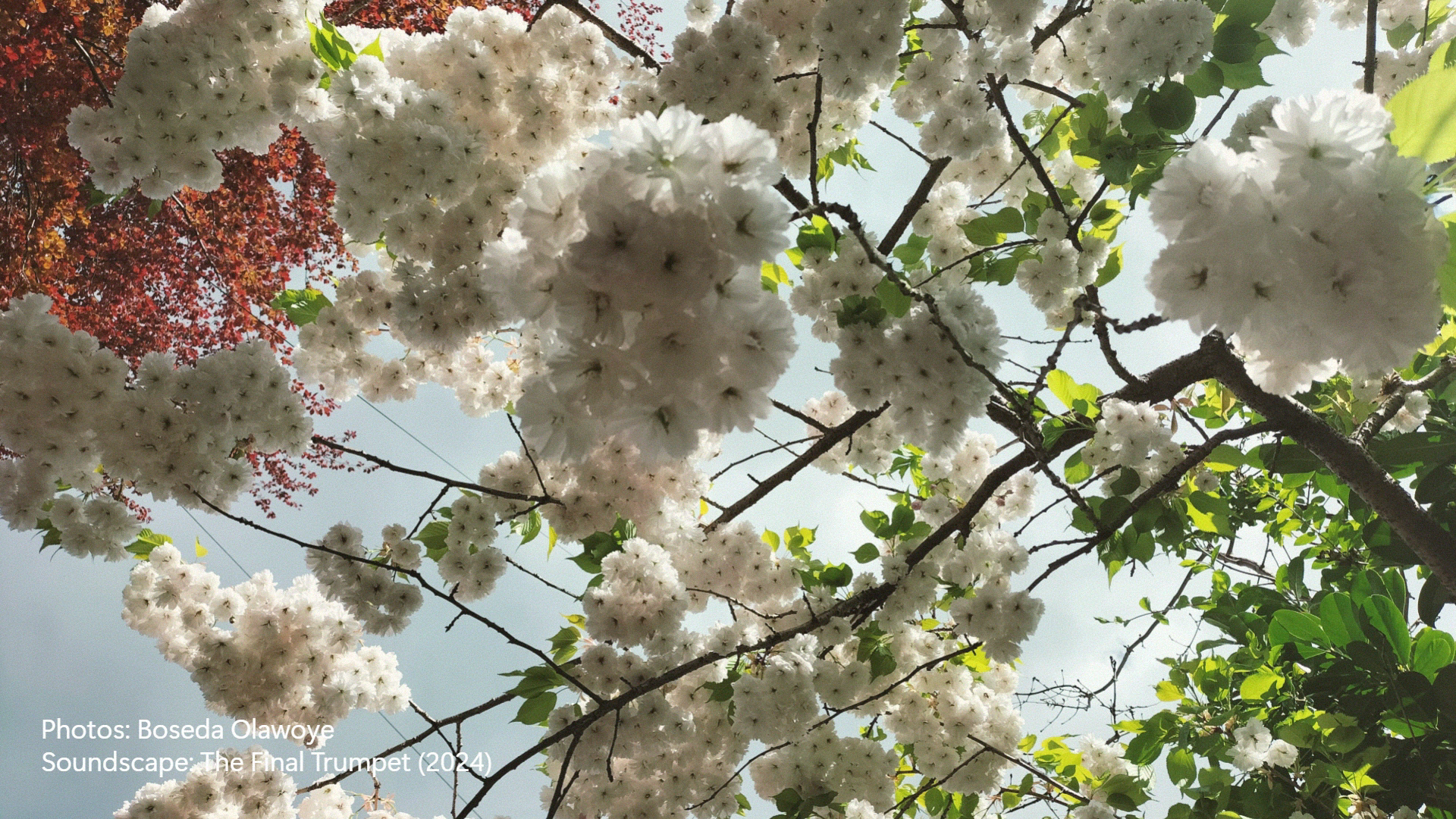
A selection from Daily Walks: The Art of Noticing, Boseda Olawoye’s project for the If Trees Could Talk International Art Biennale
Are there any trees and plants in your region that hold special significance for you?
JS: The seeds of figs (smokva) have been carried and planted from the former Yugoslavia across the diaspora, including in Telford, where I grew up in the Midlands. Though they come from a place that no longer exists, they flower and fruit in abundance.
AD: I feel connected to a big fig tree in my area that I often visit and sit with. It helps me connect with my ancestry, particularly my grandmother and the old bones and knuckles that I sit on. I also feel gratitude to the platans (plane trees) in my square, as they keep us in shade over the hot days. Plane trees had been brought to the UK during the industrial times to protect against pollution; they do that is by shedding their bark as a way to regenerate and stay healthy. I find this to be a beautiful metaphor for life, a reminder that vulnerability is powerful, and how letting go of so many unhelpful protective layers and ways of being could make us more resilient.
I FIND THIS TO BE A BEAUTIFUL METAPHOR FOR LIFE, A REMINDER THAT VULNERABILITY IS POWERFUL, AND HOW LETTING GO OF SO MANY UNHELPFUL PROTECTIVE LAYERS AND WAYS OF BEING COULD MAKE US MORE RESILIENT.
If trees could talk, what would they say? And what would you say to them?
KC: I believe trees can talk - and they are anticipating our demise; firstly by modelling how we could thrive if we minimised our interference and control of nature. They have co-habited through cycles of dominant animals, either nurturing or damaging trees over millions of years. I think they are adapting networks of survival, grief and pain caused by unnatural, human-made chemicals, shock of increasing war or bombs from the military industrial complex, textile and technology waste colonialism, sewage and plastic pollution dumping in waters that their life cycles of photosynthesis and composting cannot keep up with. I'd like to believe trees and more-than-human species have are actively increasing communications with mushrooms and fungi to help them out.
BO: Why are you simultaneously trying to save and destroying this world we all call home? We would say we are trying, we are taking action and that’s all we can do. We will keep going, hoping those in power will finally do something before it’s too late.
Anna Dermitzaki: Trees would say that there is still hope. Let your heads remember what your hearts already know that we belong to one another. I would thank them for their patience and ask how to live more like them: rooted yet reaching, resilient yet generous, quietly transforming light into life.◾️
*Sijelo Collective uses this term to include transgender women and nonbinary people.
The artists
Anna Dermitzaki is an emerging artist based in Cornwall. Anna’s practice is rooted in her experience as a third-culture kid. Focused on the dialogue between global communities and art’s social impact on our planetary emergency. Exploring nature as a fluid state between inner and outer spaces. Anna repurposes materials, using a wide range of mediums and techniques that capture an experimental dialogue between what is physically present and what is not.
Boseda Olawoye (known as Bo) is an independent creative producer/consultant based in Nottingham who works nationally and internationally. Bo uses the practice of co-creation to develop arts projects, programmes, cultural strategies with diverse communities, young people (14 to 21+), vulnerable groups, artists and partners. Her work explores race, identity, place, class, local history and social justice issues.
Sovay Berriman is an artist working for 25+ years, based in Cornwall, UK. Sovay’s work reviews and questions systems and structures of power, challenging us to claim agency and responsibility for the roles we play in the ecosystems we occupy. With a practice spanning sculpture, drawing, film, broadcasting, research and social learning situations, Sovay’s artworks are multi-faceted, with fragments and layers working together to generate whole supportive structures.
Anca Dimofte is a Romanian-born artist living in London, working across video, mixed media, and performance. With a background in documentary filmmaking, her practice is informed by feminist and social justice struggle, embodied histories, and lived experiences of migration. Her work explores how memory, stories and trauma are carried in the body, shaping individual and collective doorways for transformation, solidarity, and political resistance.
Jelena Sofronijevic is a producer, curator, writer, and researcher, working at the intersections of cultural history, politics, and the arts. Their independent curatorial projects include Invasion Ecology (2024), SEEDLINGS: Diasporic Imaginaries (2025), and Can We Stop Killing Each Other? at the Sainsbury Centre (2025), and they produce EMPIRE LINES, a podcast which uncovers the unexpected flows of empires through art. They are also pursuing a practice-based PhD with Gray’s School of Art, curating exhibitions with Balkan and Yugoslavian/diasporic artists in British art collections.
Tasnim Siddiqa Amin (she/they) is a queer, working-class Bangladeshi-British artist, theatremaker and activist from East London. Her interdisciplinary practice spans theatre, performance art, visual art and community arts facilitation, grounded in anti-racism, postcolonialism and intersectional feminism.
Tasnim’s practice is trauma-informed and grounded in care-based methodologies, shaped by lived experience and a commitment to collective wellbeing. She designs and delivers participatory arts programmes that prioritise accessibility, co-creation, and long-term relationship-building using creativity as a means of connection, reflection and resistance.
Kim Chin (she/they/we) is an interdisciplinary artist-facilitator-researcher with working-class roots, born in the UK with Filipino-Chinese-Jamaican ancestry. Their feminist practice leverages a decolonial, intersectional, intergenerational, and collaborative approach to build a fairer, generative, and hopeful world.
Through visual arts, time-based media, installation and participatory activities, awareness of the materials we use, labour, how we move through, remember, and sense our environments and each other are common themes. Workshops reflecting on how these systems and structures impact our well-being, agency, and ability to connect, occur in creative educational, art and community-focused events, and are practised daily.
Fozia Ismail is the founder of Arawelo Eats and co-founder of dhaqan collective. Her practice works across food, sound, textiles, and found objects to produce material-led artworks that explore migration, climate, identity, and diasporic memory.
Her project Camel Meat & Tapes marked a pivotal shift toward a sustained, participatory practice grounded in Somali oral traditions and shared acts of listening, eating, and making. The work positions everyday cultural practices as living archives, challenging extractive models of authorship and institutional knowledge.
Kaajal Modi(she/they) is a multidisciplinary artist-educator mediating material engagements with food, land and water to explore the politics of how humans relate to the world through our bodies and our imaginations. Kaajal works with communities (social, cultural, microbial, technological, ecological) to explore knowledges on how we live well together in the present, in ways that can inform speculations about resilient and abundant futures. Their practice is rooted in co-creation, and incorporates listening, recording, remixing, fermenting, foraging and gleaning to create lively and situated encounters between people, organisms and ecosystems in ways that invite critical reflection and action.